Résumé rapide
Les aimants en néodyme démagnétisés à la suite d'un choc physique ou d'un stockage inapproprié peuvent souvent être remis en état grâce à la méthode des mouvements de va-et-vient (10 à 20 mouvements dans un seul sens) ou à la méthode du « sandwich » : il suffit de les placer entre deux aimants puissants pendant toute une nuit. En revanche, les dommages causés par la chaleur (au-dessus de 80 à 100 °C) nécessitent généralement l’utilisation d’un aimantateur industriel à impulsions ou le remplacement de l’aimant ; les méthodes de bricolage fonctionnent rarement.
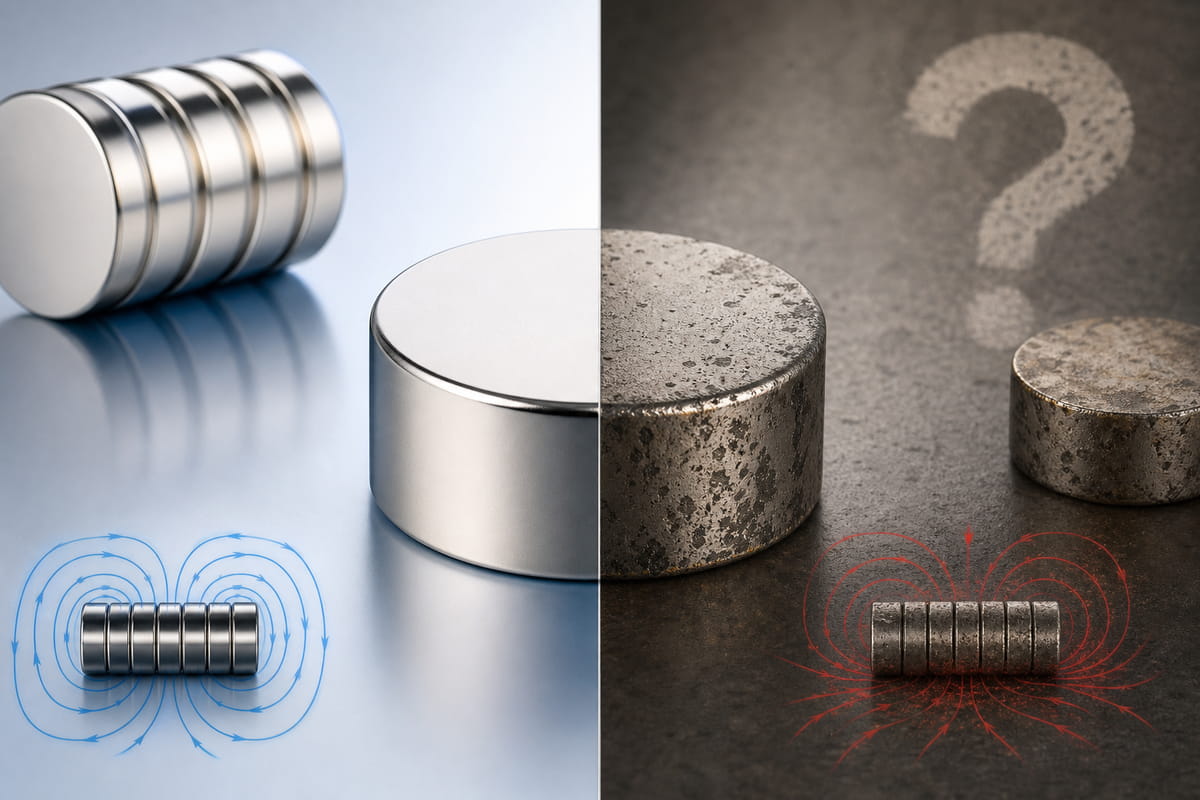
Quand on a un aimant en néodyme qui était autrefois très puissant, mais qui, aujourd’hui, arrive à peine à retenir un trombone.
Je suppose que vous vous demandez : Comment remagnétiser un aimant au néodyme sans avoir à acheter du matériel industriel coûteux.
C'est possible, mais cela dépend de pourquoi C'est d'abord votre aimant qui a perdu de sa puissance.
Dans ce guide, en tant que professionnel fabricant d'aimants en néodyme sur mesure, je vais vous expliquer en détail ce qui fonctionne, ce qui ne fonctionne pas, et à quel moment il vaut mieux limiter les pertes.
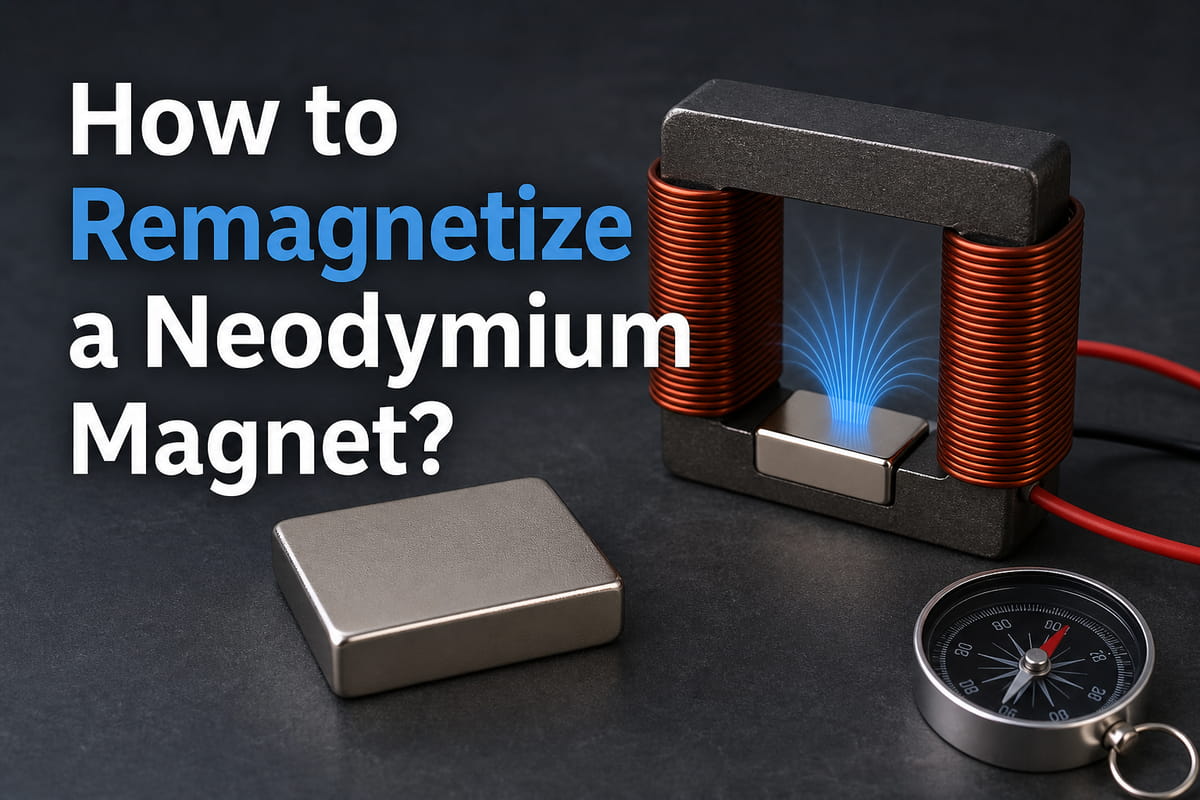
Pourquoi votre aimant a cessé de fonctionner
Avant d'entrer dans le vif du sujet, remagnétisation d'un aimant au néodyme, vous devez identifier la cause du problème.
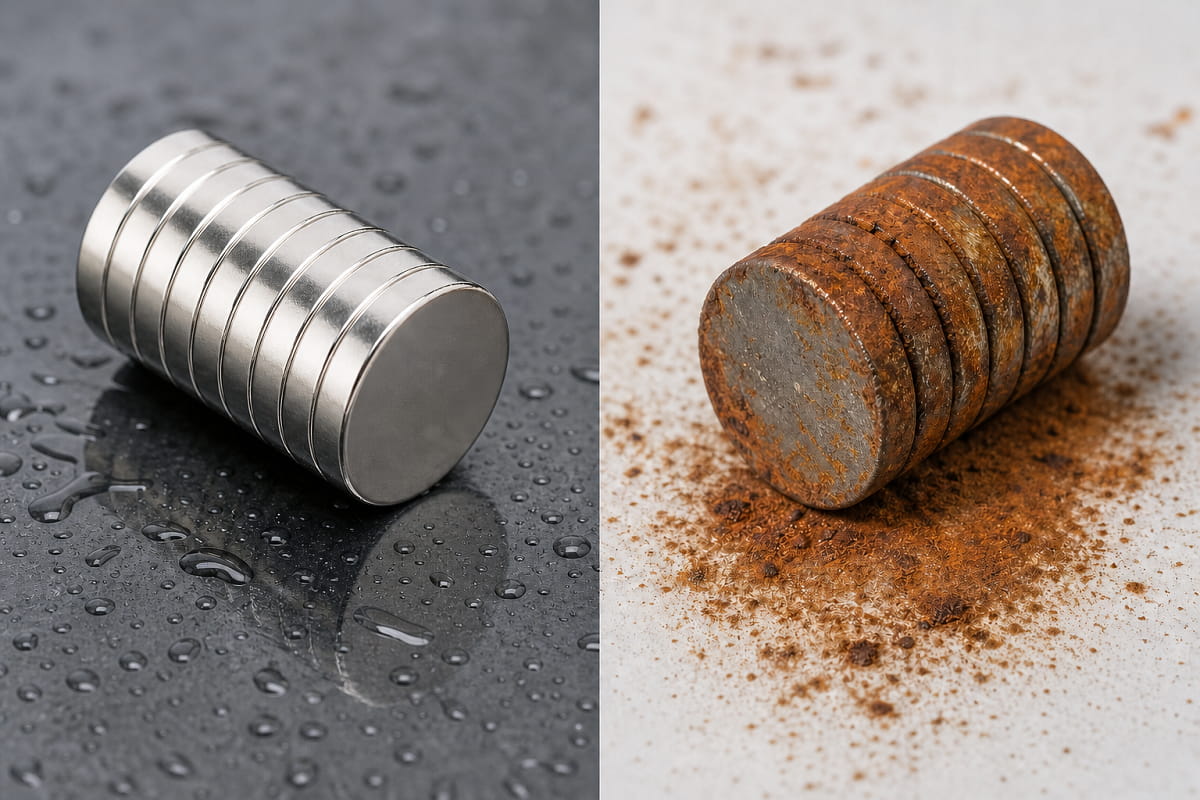
Les aimants en néodyme (ces « bêtes » argentées et brillantes) perdent leur puissance pour trois raisons principales :
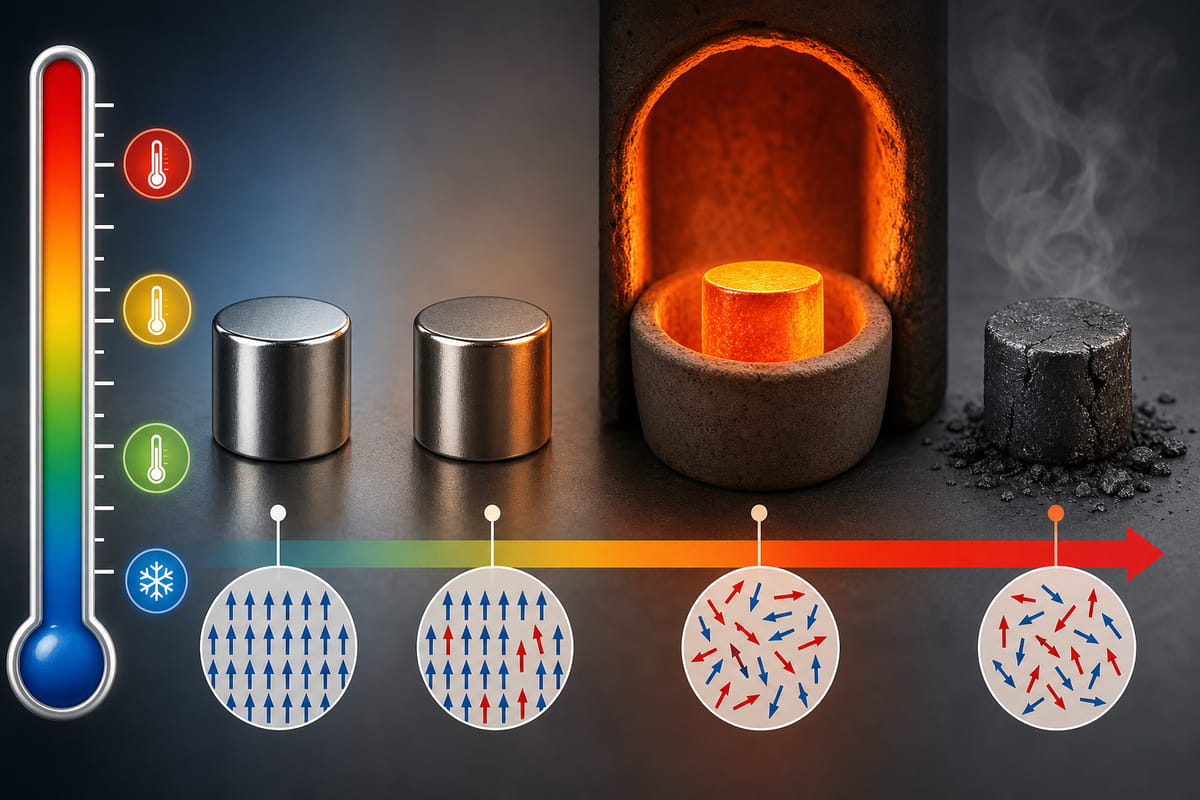
1. Chaleur – C’est là le point crucial. Les aimants en néodyme ont une température de fonctionnement maximale comprise entre 80 °C et 200 °C (selon la qualité). Si l’on dépasse cette limite, les domaines magnétiques internes passent d’une formation militaire bien ordonnée à une mêlée chaotique.
2. Choc physique – Si l'on laisse tomber un aimant ou si on le fait heurter violemment un autre aimant, cela peut perturber l'alignement de ces domaines.
3. Stockage inapproprié – Le fait de stocker des aimants en les plaçant pôle par pôle (nord contre nord) crée un champ démagnétisant constant.
Voilà le problème : sans équipement industriel, les dommages causés par la chaleur sont souvent irréversibles. Un choc physique ? Ça, ça peut se réparer.
Je vais vous montrer comment faire.
Comment remagnétiser un aimant en néodyme
La méthode du “ caressage ” à faire soi-même (pour les aimants qui ont subi des chocs)
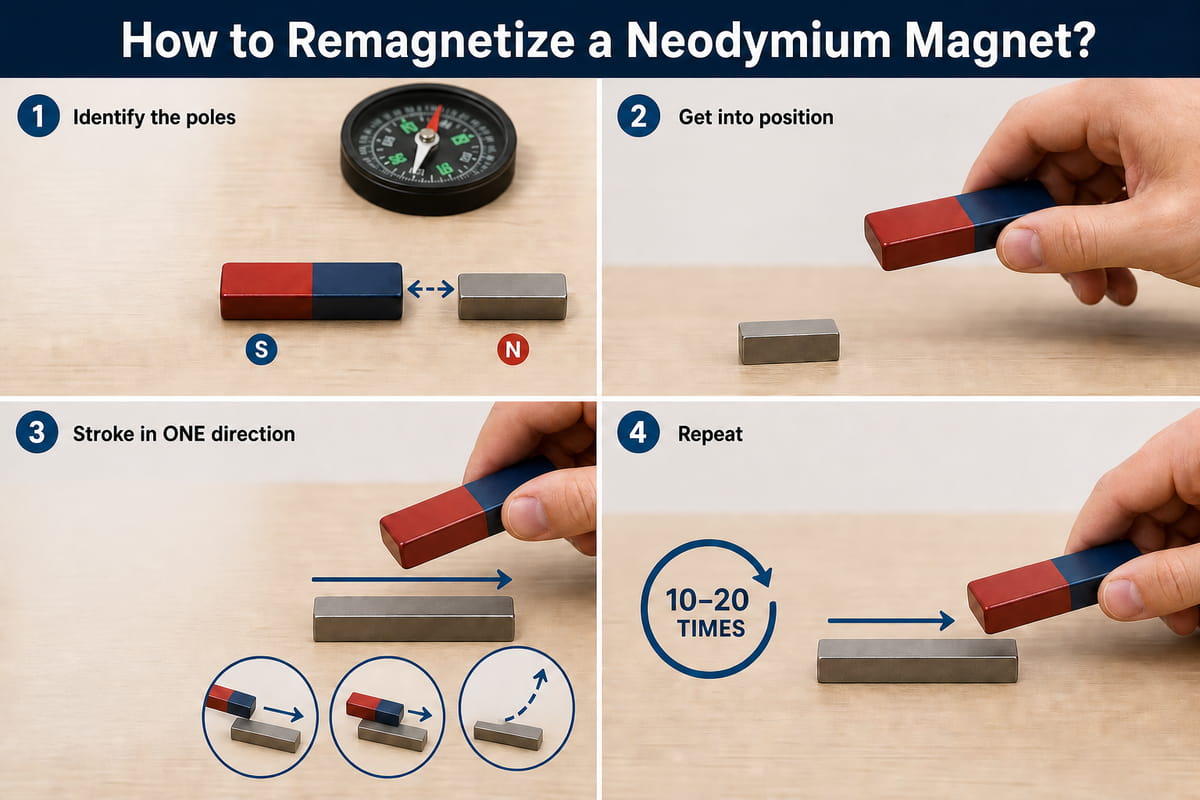
C'est la technique que j'utilise systématiquement quand on me demande Comment remagnétiser un aimant au néodyme ? qui a subi un choc physique mais qui n’a pas été cuit.
Ce dont vous aurez besoin :
- Un aimant en néodyme puissant et en bon état (d'une puissance égale ou supérieure à celle de votre aimant faible)
- Ton aimant faible
- Une boussole (facultative, mais utile)
Étape par étape :
Étape 1 : Identifier les pôles
Prenez votre aimant puissant et votre aimant faible. S'il y a encore quelques Si c'est le cas, c'est parti ! Utilisez une boussole pour déterminer quelle extrémité de votre aimant puissant attire l'aimant faible.
Étape 2 : Mettez-vous en position
Maintenez fermement votre aimant faible sur une table. Tenez l'aimant puissant dans votre main dominante.
Étape 3 : Effectuez des mouvements dans UNE seule direction
C'est là que la plupart des gens se trompent. Il ne faut pas frotter d'avant en arrière.
Approchez le pôle attractif de votre aimant puissant du pôle opposé de votre aimant faible. Faites glisser lentement l'aimant puissant sur toute la longueur de l'aimant faible, d'une extrémité à l'autre. Lorsque vous arrivez au bout, éloignez l'aimant puissant (ne le faites pas glisser en sens inverse).
Imaginez que vous dessiniez un “ d ” minuscule dans les airs. Vers le bas le long de l'aimant, puis vers le haut et loin de lui.
Étape 4 : Répétez l'opération
Répétez ce mouvement 10 à 20 fois. Toujours dans le même sens.
Conseil de pro : Utilisez un aimant en néodyme qui mesure au moins de la même largeur que l'aimant que vous essayez de réparer. Un aimant minuscule ne produira pas une intensité de champ suffisante pour réaligner ces domaines.
J'ai utilisé cette méthode avec succès sur de vieux aimants de réfrigérateur et même sur certains aimants de haut-parleurs qui avaient pris des coups lors d'un déménagement.
La méthode “ sandwich ” (pour une démagnétisation plus profonde)
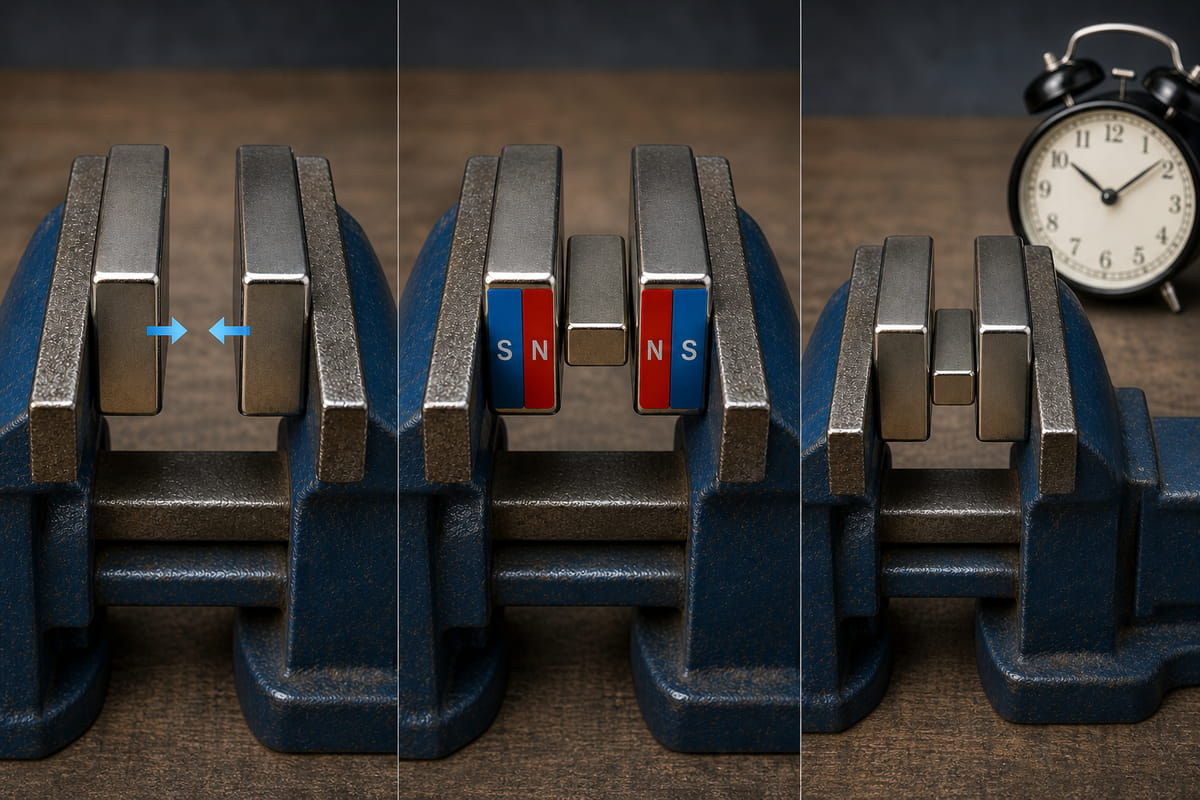
Si la méthode consistant à caresser n'a pas donné de résultats, voici une autre technique pour Comment remagnétiser un aimant au néodyme ? qui a perdu une grande partie de son intensité de champ.
Ce dont vous aurez besoin :
- Deux aimants en néodyme puissants et en parfait état
- Un étau métallique ou des serre-joints robustes
- Ton aimant faible
Étape 1 : Fixez vos deux aimants puissants dans l'étau de manière à ce qu'ils s'attirent fortement l'un l'autre. Ils doivent être parallèles, avec un espace juste assez large pour y glisser votre aimant faible.
Étape 2 : Placez délicatement votre aimant affaibli entre les deux. Il doit être placé de manière à ce que les pôles opposés se fassent face.
Étape 3 : Laissez-les comme ça. Le mieux, c'est de les laisser toute la nuit. Certains de mes clients ont laissé les aimants entre deux couches pendant 24 heures et ont obtenu d'excellents résultats.
Le champ magnétique externe puissant et continu force ces domaines « paresseux » à se remettre en place.
Est-ce que ça marche à chaque fois ? Non. Mais j'ai déjà vu cette méthode permettre de ramener la puissance des aimants à 80-90 % de leur puissance d'origine.
Quand le bricolage ne suffit pas (le problème de la chaleur)
Si votre aimant a été exposé à une chaleur intense (comme le plateau d'une imprimante 3D à plus de 100 °C pendant une longue période), les méthodes dite « de frottement » et « en sandwich » ne fonctionneront probablement pas.
Pourquoi ? Parce que la chaleur ne se contente pas de désaligner les domaines : elle peut modifier de manière irréversible la structure cristalline de l'aimant.
En effet, un utilisateur de Reddit a raconté son expérience d’impression de « fidget clickers » magnétiques contenant des aimants en néodyme de 6 x 3 mm. Le plateau était trop chaud, et ses aimants se sont révélés peu puissants. Il a essayé la méthode consistant à passer la main sur l’objet. Cela n’a pas aidé. Au contraire, cela n’a fait qu’empirer les choses.
En résumé ? Les aimants en néodyme endommagés par la chaleur nécessitent un équipement industriel, notamment un aimantateur à décharge de condensateur capable de générer un champ magnétique de 3,5 teslas ou plus.
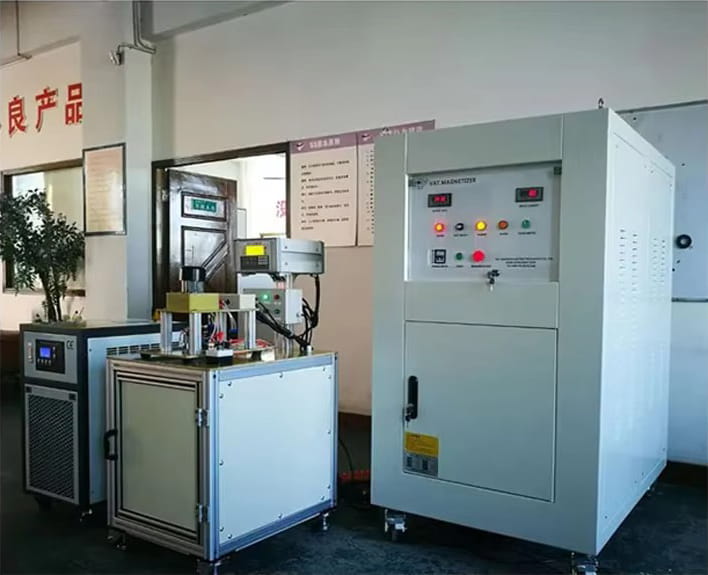
Ce n'est pas le genre de chose qu'on garde dans son garage.
L'astuce avancée (méthode du transformateur à micro-ondes)
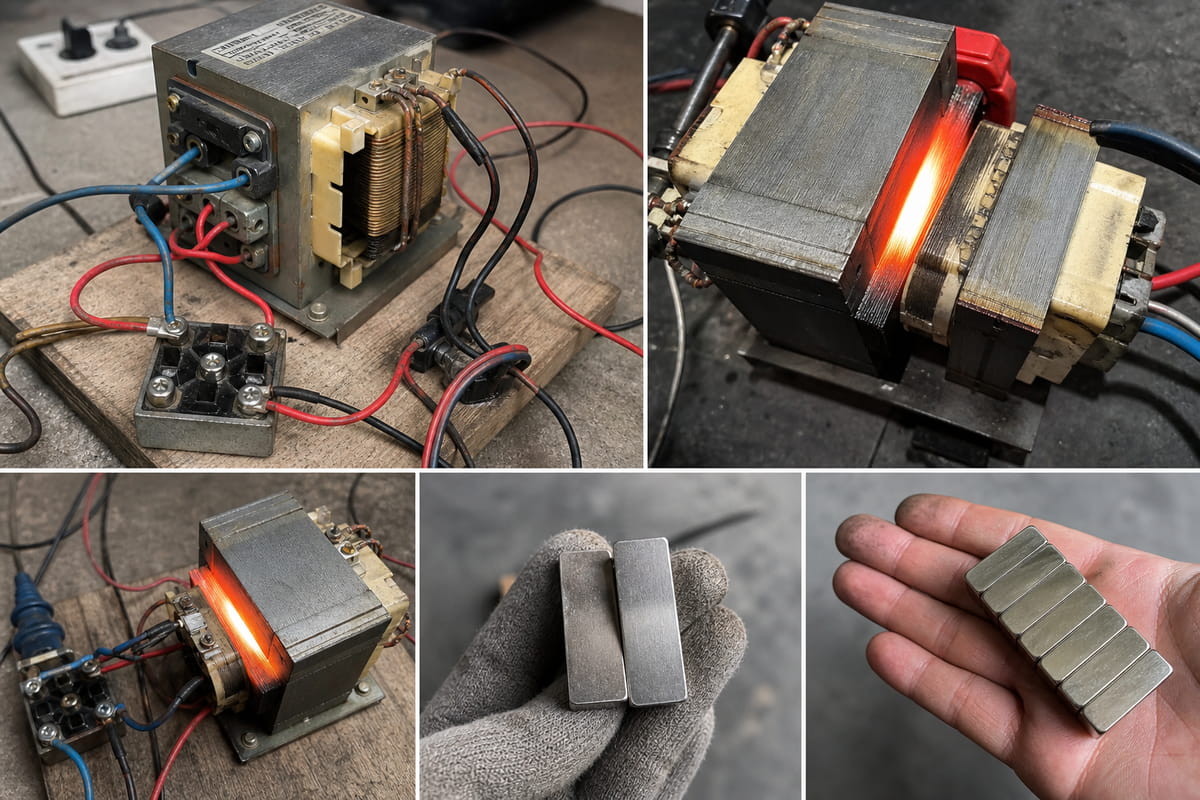
Bon, je vais vous parler d'un truc un peu farfelu. Mais ça marche.
Je suis tombé sur un message publié sur un forum par une personne qui a réussi à restaurer entièrement des aimants en néodyme démagnétisés en utilisant :
- Un transformateur pour four à micro-ondes de 1 kW
- Un pont de diodes
- Alimentation 220 V (ou 110 V selon votre lieu de résidence)
Voici ce qu’ils ont fait :
Ils ont placé les aimants démagnétisés entre les noyaux du transformateur. Ils ont ensuite court-circuité l'enroulement haute tension et appliqué une tension de 220 V au primaire via un pont de diodes. Ils l'ont laissé sous tension pendant 5 à 10 secondes (le transformateur devient TRÈS CHAUD, donc n'abusez pas).
Résultat ? Ils ont magnétisé tous leurs aimants et ont parcouru 2 500 km avec ce moteur remis à neuf.
Devriez-vous essayer ça ? À condition que vous soyez à l'aise avec les circuits électroniques à haute tension. Ce n'est pas pour les débutants. Une seule erreur et c'est fini pour toi.
Comment éviter la démagnétisation dès le départ
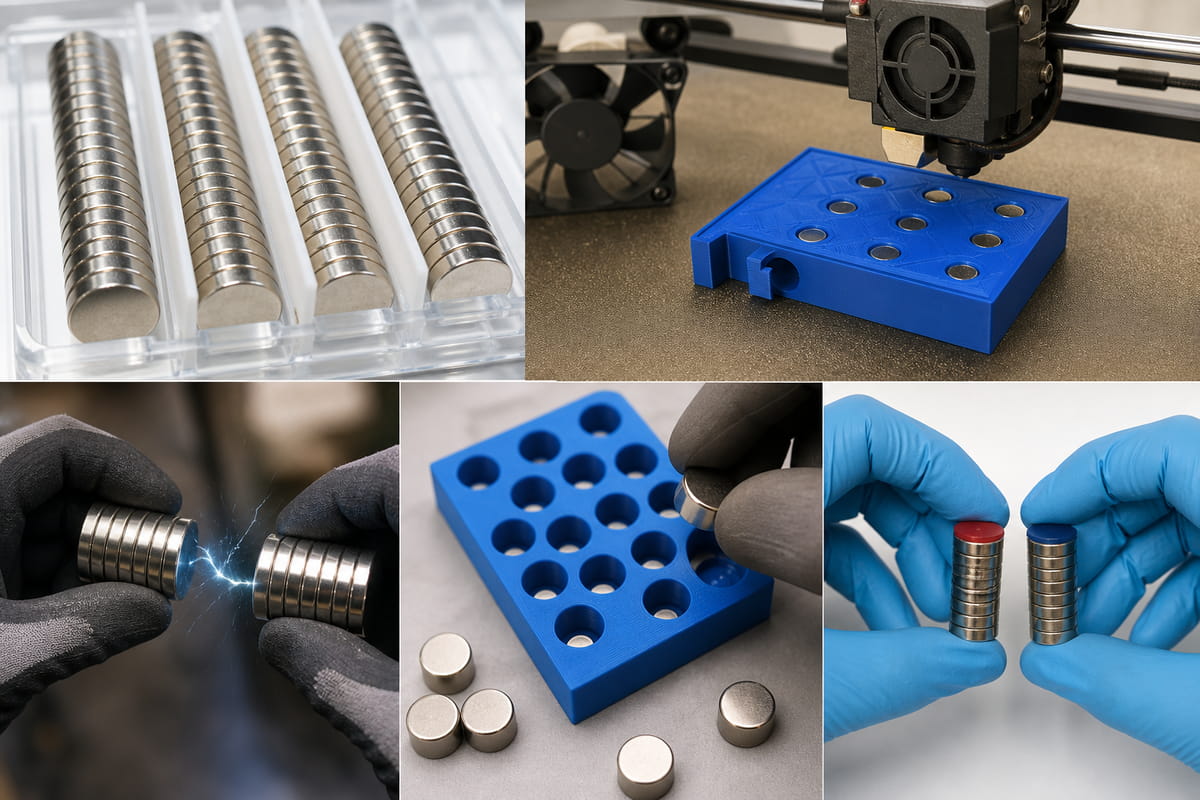
Écoute, la meilleure réponse à remagnétiser un aimant au néodyme C'est-à-dire : ne le laissez pas s'affaiblir dès le départ.
Voici ma liste de contrôle en matière de prévention :
Conservez les aimants dans de bonnes conditions – Alternez les pôles (nord-sud). Cela permet de préserver l'intensité magnétique. Les stocker « nord contre nord » crée un champ démagnétisant constant.
Surveillez vos températures – Notions de base Aimants en néodyme N35 commencent à perdre de leur puissance vers 80 °C. Si vous intégrez des aimants dans vos impressions 3D, utilisez une plaque réfrigérante ou réduisez la température du plateau après les premières couches.
Choisissez la qualité adaptée à l'usage prévu – Vous avez besoin d'une résistance à la chaleur ? Optez pour les nuances N42SH ou N40UH. Elles peuvent supporter respectivement jusqu'à 180 °C et 200 °C.
Ne laissez pas les aimants s'entrechoquer – Cette force d'impact peut provoquer un désalignement instantané des domaines. Veillez toujours à mettre les aimants en place en douceur.
Et la congélation ?
J'ai vu des gens suggérer de mettre des aimants au congélateur pour les “ recharger ”.
Est-ce que ça marche ?
Non.
En réalité, les basses températures augmentent temporairement l'intensité magnétique. Mais cela ne permet pas de réaligner les domaines. Et un froid extrême ne réparera pas les dégâts causés par la chaleur.
Alors, gardez de la place dans votre congélateur pour les glaces.
Quand faut-il remplacer un aimant au néodyme plutôt que de le remagnétiser ?
Voici mon avis sincère sur Comment remagnétiser un aimant au néodyme ? par rapport à l'achat d'un neuf :
| Situation | Mesure recommandée |
|---|---|
| Légère démagnétisation due à un choc physique | Essayez la méthode des caresses |
| Perte modérée sur le terrain (sans exposition à la chaleur) | Essayez la méthode du « sandwich » pendant la nuit |
| Dommages causés par la chaleur (au-dessus de 100 °C) | Remplacer l'aimant |
| Aimant fissuré ou endommagé physiquement | Remplacer immédiatement |
| Pièce d'un moteur/générateur coûteux | Contactez un service de magnétisation professionnel |
Les nouveaux aimants en néodyme ne coûtent pas cher. Vraiment pas cher, même. Un paquet de 50 aimants de 6 x 3 mm coûte moins de $10 sur Amazon.
Votre temps vaut-il plus que $10 ? Probablement.
En résumé
Bon, je vais conclure.
Remagnétisation d'un aimant au néodyme Cela se résume à trois voies :
Parcours n° 1 (réussite en bricolage) : Votre aimant a perdu de sa puissance à la suite d'un choc physique. Utilisez la méthode des caresses (10 à 20 caresses dans un seul sens) ou la méthode du « sandwich » (laissez-le toute la nuit entre deux aimants puissants). Vous devriez constater une récupération de 80 à 100%.
Voie 2 (Dégâts thermiques) : Votre aimant a été endommagé par une température supérieure à 80 °C. Les méthodes artisanales ne fonctionneront probablement pas. Vous aurez besoin d'un aimantateur industriel à impulsions ou d'un aimant de rechange.
Méthode n° 3 (l'astuce) : Vous disposez d'un transformateur de micro-ondes et vous savez ce que vous faites. C'est la solution idéale pour remagnétiser à moindre coût des aimants endommagés par la chaleur.
Voici ce que je voudrais que vous reteniez :
La plupart des personnes qui posent la question Comment remagnétiser un aimant au néodyme ? ont tout intérêt à en acheter des neufs. Ils ne coûtent pas cher, et le temps que vous passeriez à essayer de redonner vie à un aimant hors d'usage pourrait être consacré à quelque chose de plus productif.
Mais si vous êtes déterminé à réparer ce que vous avez – ou si vous travaillez avec un ensemble sur mesure pour lequel le remplacement n'est pas envisageable –, les méthodes de « stroking » et « sandwich » constituent votre meilleure option.
Mais ne vous attendez pas à des miracles de la part d’aimants endommagés par la chaleur.
Allez donc vérifier vos aimants. Testez leur puissance. Et s'ils ont perdu de leur puissance à cause d'un choc ? Essayez donc cette méthode de caresses.
Vous pourriez être surpris de ce qui va se passer.