Résumé rapide
- Non, il n'est pas possible de souder des aimants en néodyme à l'aide de méthodes de soudage classiques, car cela détruirait leur magnétisme : la chaleur extrême dégagée dépasse en effet la température de Curie. De plus, le champ magnétique perturbe l'arc de soudage, et le matériau risque de se fissurer ou de prendre feu.
- Au lieu de recourir à la soudure, utilisez des adhésifs de construction, des fixations mécaniques (comme des vis à tête fraisée) ou des assemblages pré-soudés, dans lesquels le boîtier en acier est d'abord soudé, puis l'aimant y est ajouté par la suite.
Aimants en néodyme jette un œil comme du métal. On dirait du métal au toucher. Du coup, votre premier réflexe est d'allumer votre poste de soudure MIG ou TIG et d'en fixer un à votre projet.
Mais pour faire court, la réponse est non, il est impossible de souder des aimants en néodyme à l'aide de méthodes de soudage classiques. En effet, tenter d'en souder un est l'un des moyens les plus rapides de le détruire.
Dans ce guide, en tant que professionnel, fabricant d'aimants en néodyme, je vais vous expliquer en détail ce qui se passe exactement lorsque vous essayez de souder un aimant au néodyme. Je vous présenterai également les solutions professionnelles qui fonctionnent réellement (sans abîmer votre aimant).
Allons-y.
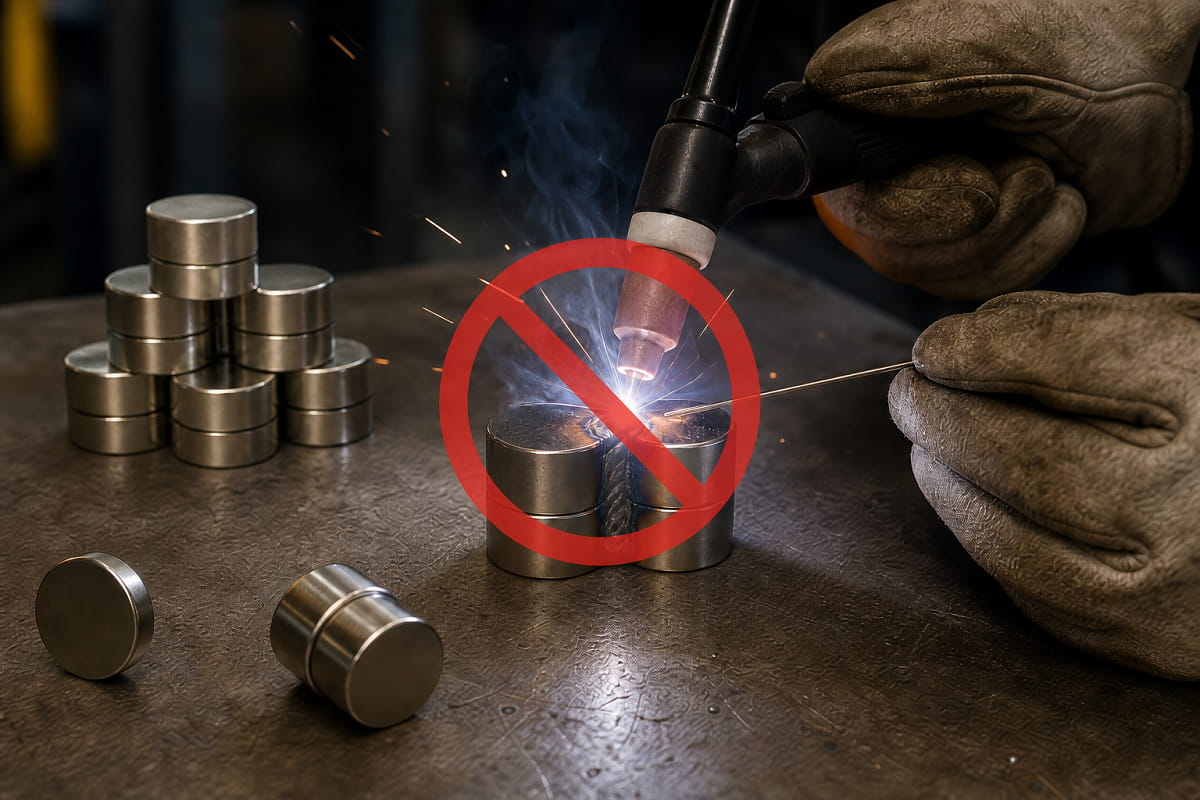
Que se passe-t-il lorsqu'on soude un aimant au néodyme ?
Je l'ai testé moi-même. Et j'ai discuté avec des ingénieurs qui ont commis l'erreur de se précipiter sur leur poste à souder avant d'y avoir bien réfléchi.
Les résultats ne sont pas réjouissants.
Lorsque l'on applique une chaleur aussi intense à un aimant au néodyme, trois phénomènes se produisent. Et aucun d'entre eux n'est positif.
1. Démagnétisation instantanée
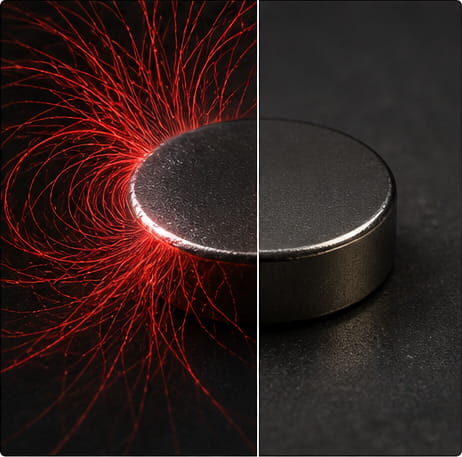
Voici ce qu’il faut savoir sur les aimants en néodyme :
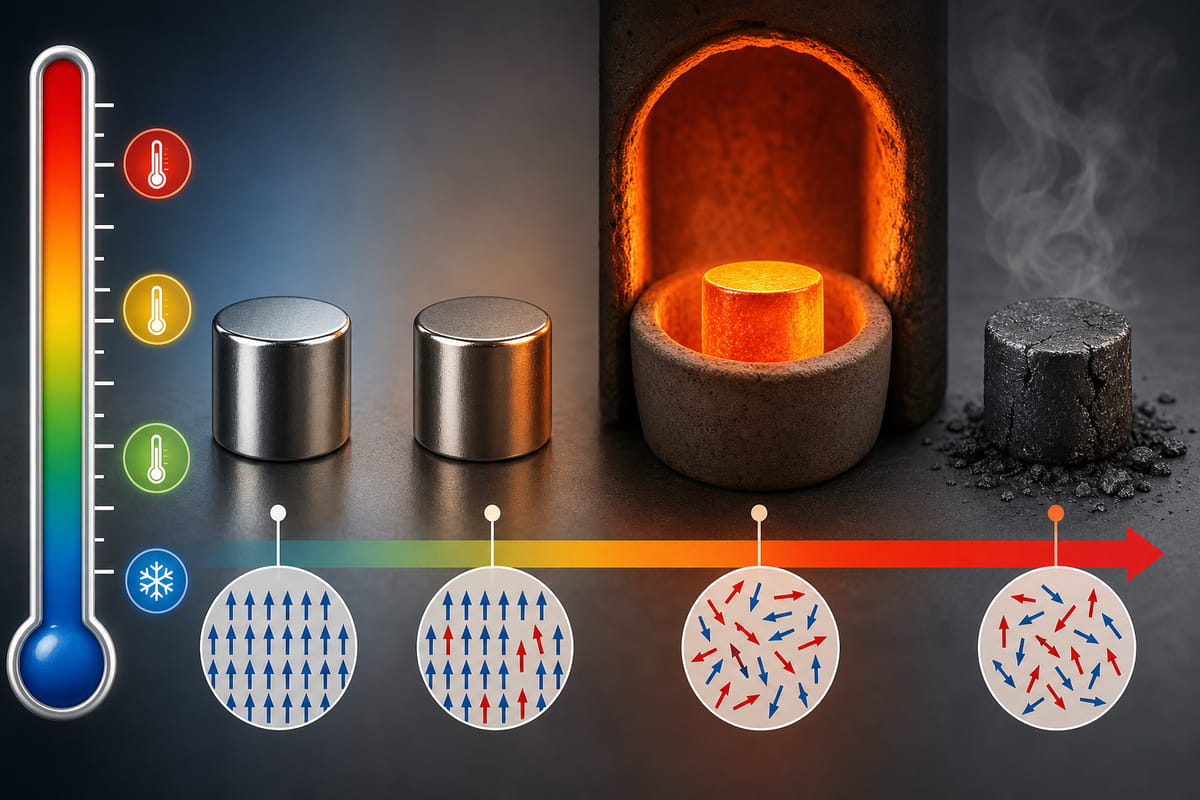
Ils commencent à perdre leur pouvoir magnétique à des températures étonnamment basses. Selon leur qualité, la plupart commencent à se dégrader vers de 80 °C à 150 °C.
Votre arc de soudage ? C'est justement ce dont nous parlons plus de 3 000 °C.
Ce n'est pas un problème. C'est une catastrophe.
Dès que vous dépassez le Température de Curie (environ 310 °C pour la plupart des aimants au néodyme), les domaines magnétiques se répartissent de manière totalement aléatoire. L'aimant perd sa charge de manière définitive.
Et je veux dire pour de bon.
Il est impossible de le “ remagnétiser ” par la suite. Vous vous retrouvez alors avec un morceau de métal coûteux et fragile qui ne possède plus aucune force magnétique.
Conseil de pro : Certaines personnes se demandent : “ Et si je soude l'aimant ? » avant ” … en le magnétisant ? » Nous y reviendrons dans un instant. Attention, spoiler : ça ne marche pas non plus.
2. Rupture d'arc
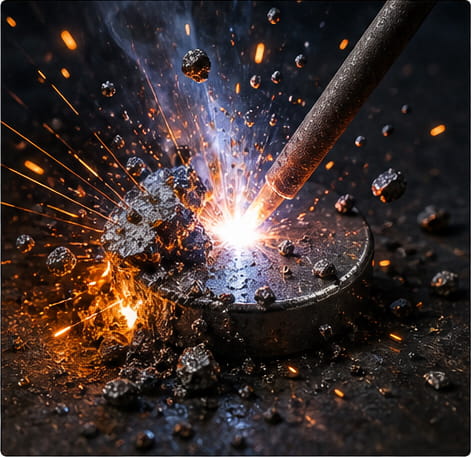
Même si, d'une manière ou d'une autre, vous faisiez abstraction du problème de surchauffe, vous vous heurteriez à un autre problème :
Le champ magnétique de l'aimant s'oppose activement à votre arc de soudage.
J'ai déjà vu ça arriver. L'arc est tiré, déformé et dévié de sa trajectoire. Impossible, littéralement, de tracer un trait net. C'est comme essayer de peindre en plein ouragan.
Ce phénomène s'appelle arc électrique, ce qui rend impossible tout soudage de précision.
3. Rupture structurelle
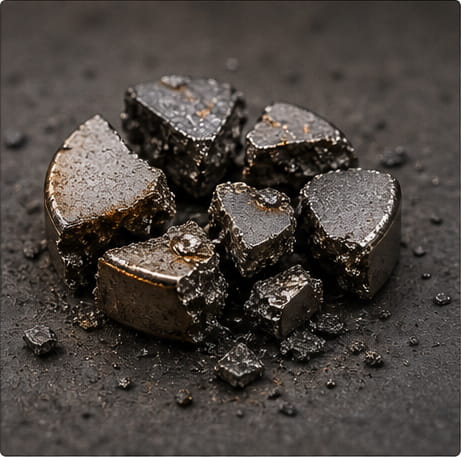
Voyons de quoi sont réellement composés les aimants en néodyme.
Il s'agit d'un composite fritté composé de néodyme, de fer et de bore. Ils sont fabriqués par métallurgie des poudres, et non par les procédés traditionnels de fusion et de moulage.
Lorsque vous soumettez cette structure à une chaleur extrême, trois phénomènes se produisent :
- Grossissement des grains – La structure cristalline fine qui confère ses propriétés à l'aimant prend des proportions anormalement grandes, ce qui nuit à ses performances
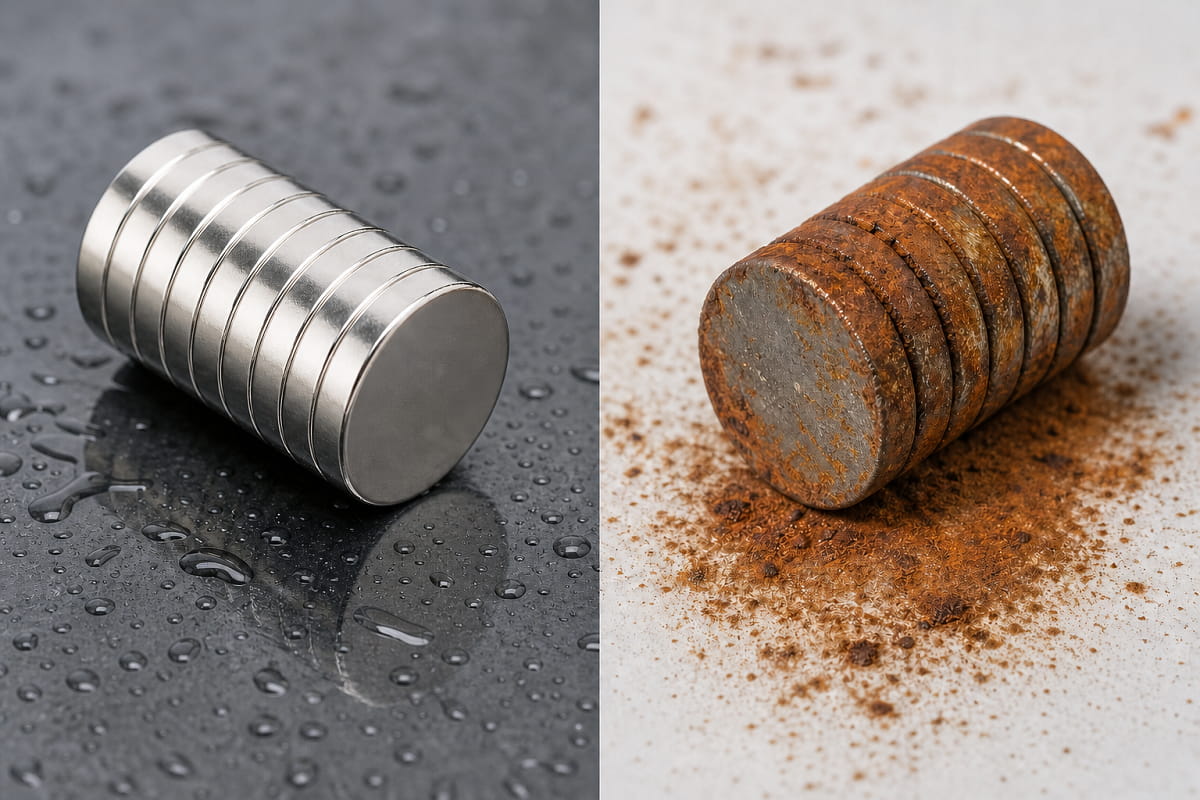
- Oxydation – La phase riche en néodyme s'oxyde et forme des composés fragiles
- Fissuration – En raison de sa faible conductivité thermique, un choc thermique provoque la rupture de l'aimant
En résumé ? Même si, par miracle, vous parveniez à éviter la démagnétisation (ce qui n'arrivera pas), l'aimant resterait tout de même endommagé sur le plan structurel.
Peut-on souder des aimants en néodyme avant leur magnétisation ?
Beaucoup d'ingénieurs se disent : “ Si la chaleur détruit le magnétisme, pourquoi ne pas souder l'aimant ? » d'abord, puis ” le magnétiser ? »
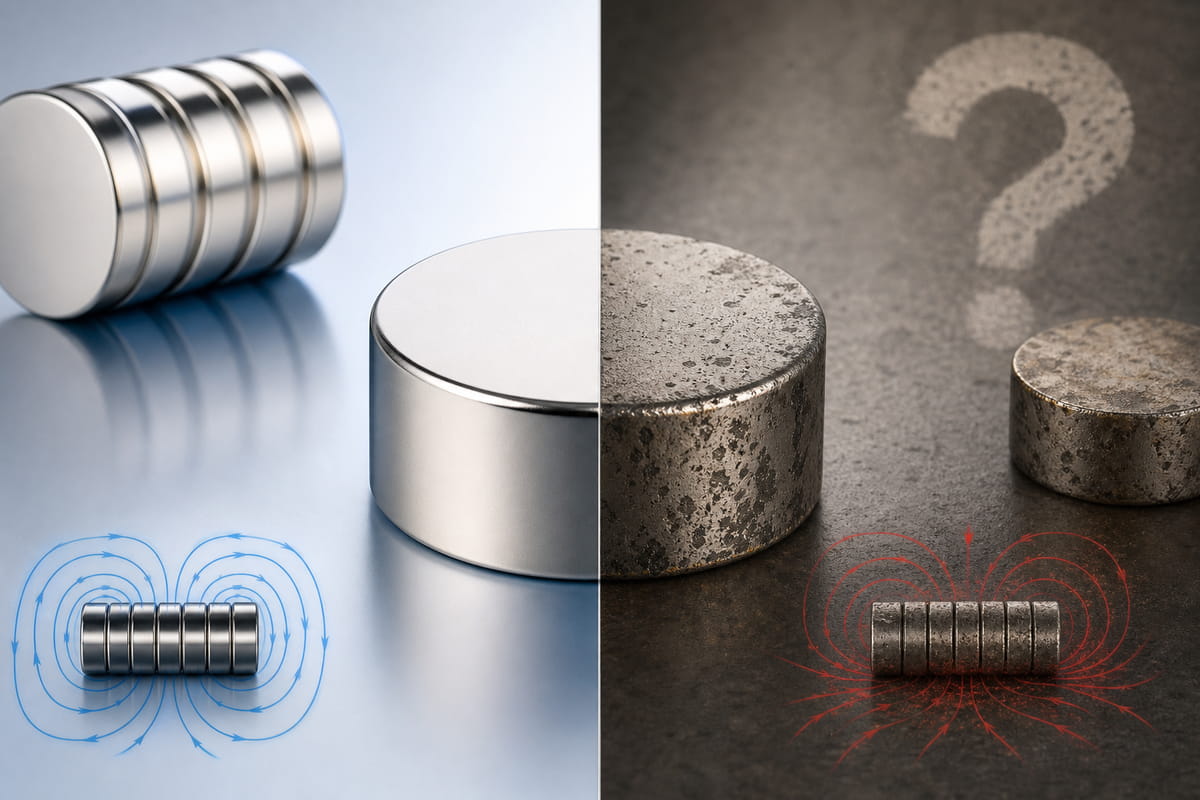
Des études montrent que le soudage direct entraîne une dégradation irréversible du matériau, même lorsque l'aimant n'est pas encore magnétisé.
La chaleur extrême dans la zone affectée par la chaleur (HAZ) provoque un grossissement des grains. Cela réduit considérablement ce qu’on appelle coercivité intrinsèque (Hcj). En clair ? Même si vous essayez de l'aimanter par la suite, l'aimant sera “ faible ” et instable.
De plus, le choc thermique génère des contraintes internes qui provoquent des fissures avant même que l'aimant ne se soit refroidi.
Donc non. Ça ne marche pas non plus.
Les risques liés au soudage d'un aimant en néodyme
Bon, disons que vous ignorez tout ce que je viens de dire et que vous essayez quand même de souder un aimant au néodyme.
Non seulement vous risquez d'abîmer votre aimant, mais vous vous mettez également en danger.
Vapeurs toxiques
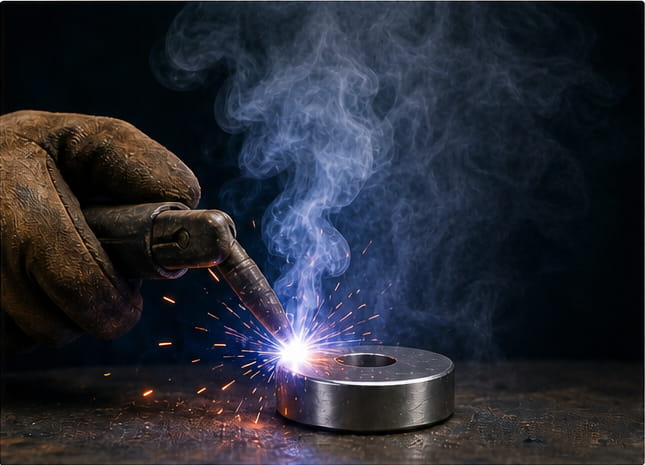
La plupart des aimants en néodyme sont recouverts d'une couche de nickel-cuivre-nickel ou d'époxy. Lorsque l'on applique un arc de soudage sur ces aimants, ces couches brûlent.
La fumée qui en résulte contient notamment des éléments tels que vapeurs d'oxyde de nickel. Si vous en inhalez une quantité suffisante sans ventilation adéquate, vous risquez de souffrir d’une irritation des voies respiratoires ou d’une affection appelée “ fièvre des fumées métalliques ”.”
Crois-moi. Ce n'est pas drôle.
Risque d'incendie
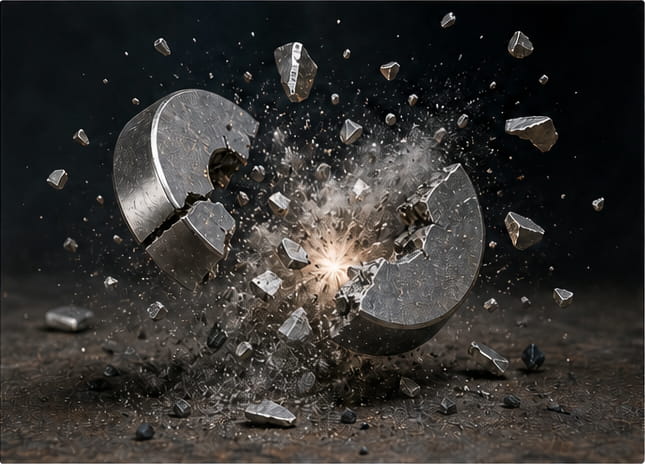
Voici quelque chose dont la plupart des gens ne se rendent pas compte :
Bien qu’un bloc d’aimant en néodyme massif ne soit pas inflammable, le choc thermique provoqué par le soudage entraîne souvent la se briser de manière explosive.
Les poussières fines et les petits fragments ainsi formés sont TRÈS réactifs. Ils peuvent s'enflammer au contact d'étincelles ou de flammes nues.
Du coup, vous vous retrouvez avec un aimant hors d'usage ET un risque d'incendie sur les bras.
Ce n'est pas un bon compromis.
De meilleures alternatives au soudage des aimants en néodyme
Bon, alors tu… On ne peut pas souder des aimants au néodyme directement. Mais vous devez tout de même en associer un à votre projet.
Tu fais quoi dans la vie ?
J'ai testé pratiquement toutes les méthodes qui existent. Voici celles qui fonctionnent vraiment.
Alternative #1 : Adhésifs structurels (la norme du secteur)
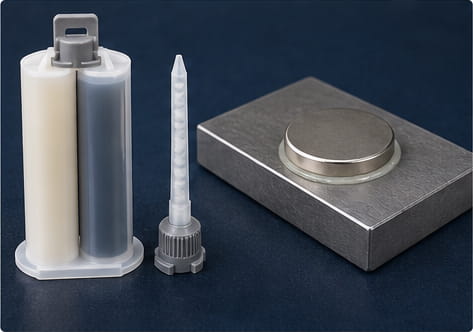
C'est ce que je recommande personnellement pour la plupart des applications.
Les adhésifs industriels haute performance permettent d'obtenir une liaison à la fois solide et sans apport de chaleur. Aucun risque de démagnétisation. Aucun dommage structurel.
Matériel nécessaire :
- Résines époxy bicomposantes conçues pour le collage métal-métal
- Acryliques trempés haute performance
Pourquoi ça marche :
Ces adhésifs répartissent les contraintes de manière uniforme sur toute la surface. Ils assurent également l'étanchéité de la surface de contact, empêchant ainsi l'oxydation et la corrosion.
Conseil de pro : Assurez-vous que les deux surfaces sont propres avant d'appliquer la colle. Toute trace d'huile, de poussière ou de résidu risque d'affaiblir l'adhérence.
Alternative #2 : Fixation mécanique
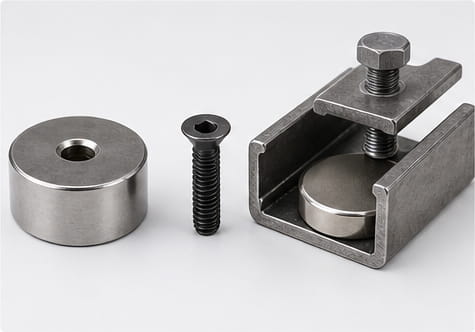
Si vous avez besoin d'un assemblage démontable ou d'une solution capable de résister à des contraintes mécaniques importantes, optez pour une fixation mécanique.
Les options disponibles sont les suivantes :
- Aimants à tête fraisée – Ces pièces sont dotées de trous pré-usagés, ce qui vous permet de les boulonner directement à votre ossature
- Canaux et serrage – Concevez votre dispositif de fixation en acier avec des fentes, des logements ou des pinces permettant de maintenir l'aimant en place de manière mécanique
Cette approche permet à la structure métallique de supporter la charge tandis que l'aimant fournit la force nécessaire. C'est d'une solidité à toute épreuve.
Alternative #3 : Ensembles magnétiques pré-soudés
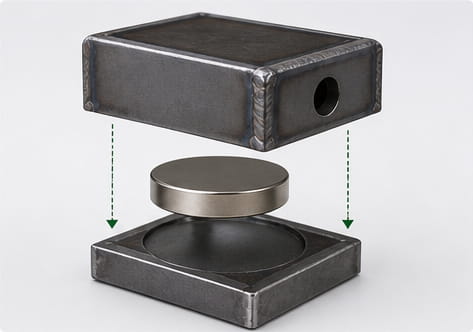
Voici une stratégie à laquelle recourent de nombreux ingénieurs d'industrie :
Effectuez tous vos travaux de soudage à haute température sur le boîtier en acier Tout d'abord, laissez refroidir complètement. Ensuite fixer ou monter l'aimant en néodyme dans le boîtier.
Vous bénéficiez de la résistance d'une structure en acier soudée et des performances magnétiques irréprochables.
Voilà comment font les pros.
Et qu'en est-il du soudage des aimants en néodyme ?
Réponse courte : Non.
C'est le même problème qu'en soudage, mais à des températures légèrement plus basses.
Le soudage génère encore suffisamment de chaleur pour faire dépasser l'aimant sa température de Curie. Vous allez le démagnétiser avant même d'avoir terminé la soudure.
De plus, le champ magnétique perturbe le processus de soudure lui-même.
Alors, contentez-vous des alternatives que j'ai évoquées plus haut.
Quelques remarques sur l'usinage des aimants en néodyme
Puisqu'on parle de modification des aimants, j'aimerais aborder la question de l'usinage.
Les aimants en néodyme sont extrêmement dur et cassant. Il s'agit du RC46 sur l'échelle “ C ” de Rockwell. C'est plus dur que la plupart des forets et outils disponibles dans le commerce.
Si vous essayez d'en usiner un sans le matériel adéquat :
- Vos outils vont chauffer et s'abîmer
- L'aimant peut se briser s'il subit une force importante (risque de blessure)
- La poussière produite est inflammable
Ce qui fonctionne vraiment : Outillage diamanté, machines d'électroérosion (EDM) et abrasifs.
Mais franchement ? À moins d'être un professionnel chevronné, mieux vaut laisser l'usinage aux experts.
Applications concrètes
Donc, si vous On ne peut pas souder des aimants au néodyme, pourquoi sont-ils si populaires ?
Car lorsqu'on les utilise correctement, ils sont incroyables.
Voici où vous les trouverez :
- Moteurs et générateurs – Collé ou fixé mécaniquement
- Pinces magnétiques pour le soudage – Ces dispositifs maintiennent vos pièces en place SANS être eux-mêmes soudés
- Capteurs et haut-parleurs – Fixé à l'aide d'adhésifs ou de fixations mécaniques
- Applications dans le domaine des holdings industriels – Utilisation de vis à tête fraisée ou de boîtiers sur mesure
Vous remarquez une tendance ? Aucune de ces applications ne nécessite de souder l'aimant directement. Elles utilisent toutes des méthodes d'assemblage à froid.
Foire aux questions
Peut-on souder de l'acier magnétique ?
Oui. L'acier doté de propriétés magnétiques se soude très bien. La différence ? L'acier est ductile et ne perd pas ses propriétés magnétiques de la même manière qu'un aimant au néodyme.
Les aimants de soudage sont-ils efficaces ?
Tout à fait. Mais il ne faut pas confondre les “ aimants de soudage ” (aimants utilisés pour maintenir des pièces métalliques) pour soudage) et “ soudage d’aimants au néodyme ” (essayer de souder l’aimant lui-même).
Les aimants de soudage – ces outils qui maintiennent vos pièces à des angles de 45 ou 90 degrés – sont formidables. Je m'en sers tout le temps.
Que se passe-t-il si l'on soude sur un aimant ?
Vous perdez définitivement les propriétés magnétiques. La chaleur dépasse la température de Curie, ce qui provoque la randomisation des domaines magnétiques. Point final.
Mon conseil « #1 » pour travailler avec des aimants en néodyme
Voici ce que j'ai appris après des années de tests et d'échanges avec des ingénieurs :
Procédez à rebours.
Concevez votre assemblage de manière à ce que l'aimant soit la DERNIÈRE pièce que vous ajoutez.
Effectuez d'abord toutes les opérations de découpe, de perçage, de soudure et de meulage sur le boîtier ou le support. Laissez le tout refroidir. Fixez ensuite votre aimant au néodyme à l'aide de colle ou de vis.
Ce processus simple vous évite les 100% de problèmes que j'ai décrits dans ce guide.
En résumé
Revenons donc à la question principale :
Peut-on souder des aimants au néodyme ?
Non. C'est vraiment impossible.
La chaleur détruit le magnétisme. Le champ magnétique perturbe votre arc. Et le matériau lui-même se dégrade sous l'effet des contraintes thermiques.
De plus, les émanations toxiques et les débris inflammables soulèvent de réelles préoccupations en matière de sécurité.
Mais voici la bonne nouvelle :
Vous n'êtes pas OBLIGÉ de les souder.
Les adhésifs industriels, les fixations mécaniques et les assemblages pré-soudés fonctionnent tous à merveille. Ils préservent à la fois l'intégrité structurelle de l'aimant ET ses performances magnétiques.
Alors, épargnez-vous des maux de tête. Oubliez le poste à souder. Optez pour une méthode qui fonctionne vraiment.