Résumé rapide
Yes, neodymium magnets break very easily. They are incredibly brittle and behave more like ceramic than metal – they shatter easily if dropped or slammed together. Never let them snap together uncontrolled; always slide magnets apart rather than pulling directly off the stack.
Dans ce guide, en tant que professionnel fabricant d'aimants en néodyme sur mesure, I’m going to walk you through exactly why neodymium magnets are so fragile, what happens when they break, and most importantly – how to stop it from happening to you.
Allons-y.
Why Neodymium Magnets Are Shockingly Brittle
Aimants en néodyme look like metal. They’ve got that shiny, nickel-plated finish that makes them seem tough. So it’s natural to assume they’re as strong and durable as a piece of steel.
But that assumption couldn’t be further from the truth.
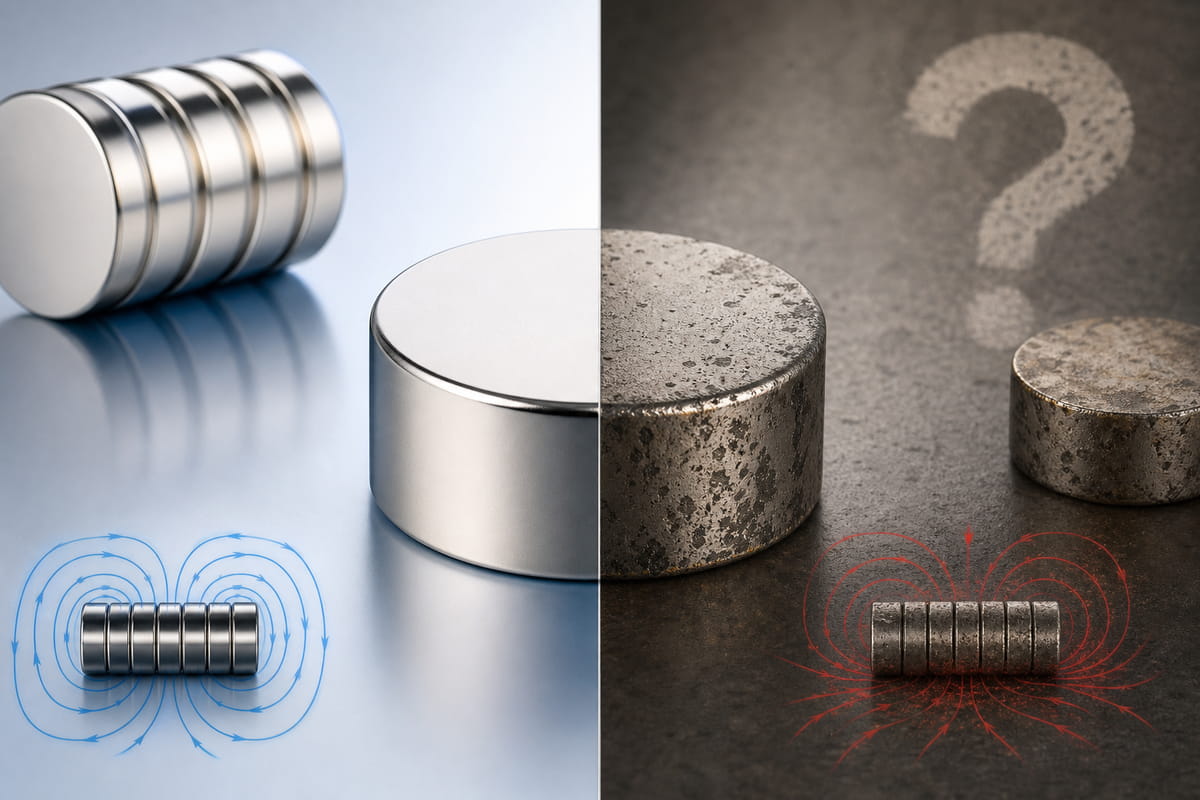
Neodymium magnets are made from a material called neodymium-iron-boron (NdFeB). And despite their metallic appearance, they behave more like ceramics than metals.
Pro Tip: This brittleness comes from how they’re manufactured. These magnets are made by compressing fine powder into blocks using a process called sintering. The result is a hard, dense material with almost no flexibility. And that means any sudden impact – even from just a few inches – can cause them to chip, crack, or shatter completely.
What Happens When a Neodymium Magnet Breaks?
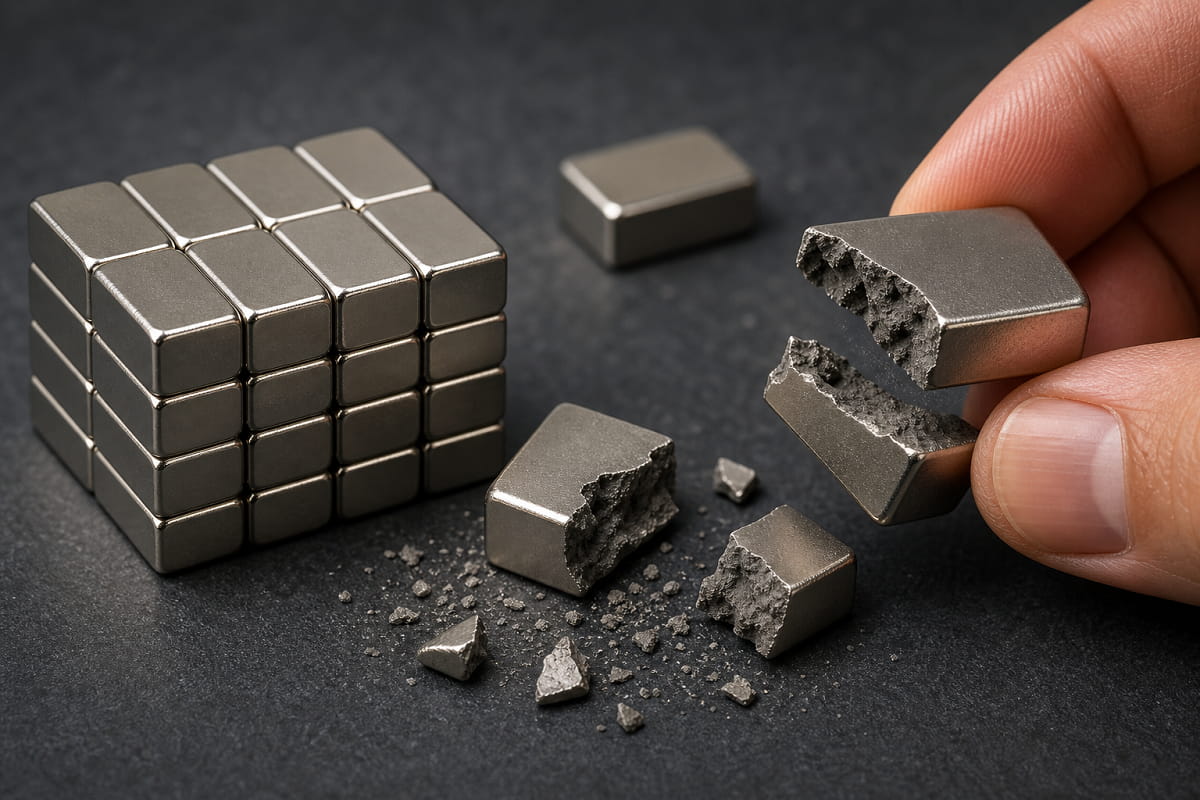
When a neodymium magnet breaks, it usually shatters into multiple fragments with sharp, jagged edges. And because the pieces are still strongly magnetic, they can snap back together with incredible force – which is a recipe for pinched fingers and nasty cuts.
Here’s what else happens:
Loss of Magnetic Strength
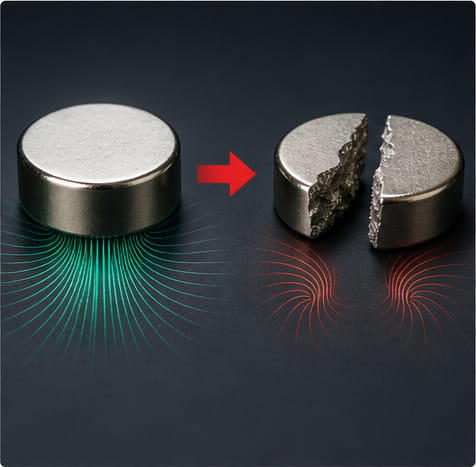
Here’s a common question I get: “Does a broken magnet lose its magnetism?”
The individual pieces will still be magnetic. But the overall magnetic strength of the system drops significantly. Why? Because you’ve disrupted the original magnetic circuit. The pieces are now smaller, and smaller magnets have weaker magnetic fields.
Sharp, Dangerous Edges
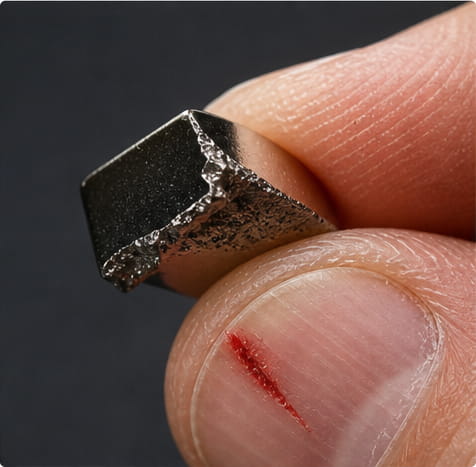
Those fragments I mentioned? They can be extremely sharp. I’m talking cut-through-gloves sharp. And when two broken pieces snap together unexpectedly, you’ve got a serious safety hazard on your hands.
Tiny Flying Shards
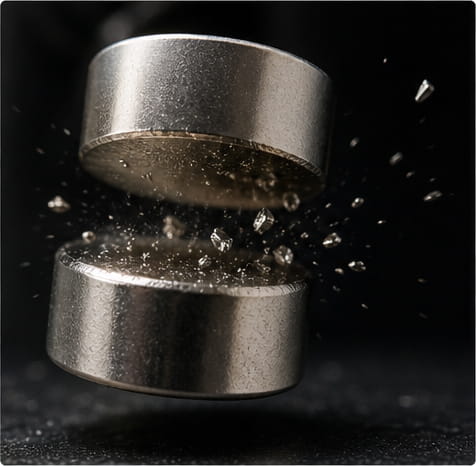
This one scares me the most.
When two neodymium magnets slam together uncontrolled – or when one hits a hard surface – the impact can send small, sharp metal pieces flying through the air at high speeds.
That’s why I strongly recommend wearing protective eyewear whenever you’re handling these magnets.
Magnetic Force + Brittleness = Trouble
Neodymium magnets are the strongest permanent magnets on Earth. And that incredible magnetic strength is exactly what makes them so easy to break.
Let me walk you through a scenario.
You’ve got two neodymium magnets. You’re holding one in each hand. You bring them within a few inches of each other…
SNAP.
They leap out of your hands and slam together at high speed. The impact force is massive – way more than what you’d expect from two small metal objects.
And because the magnets are brittle, that impact often causes them to crack or shatter.
In fact, our own analysis of magnet failures shows that uncontrolled snapping is the #1 cause of neodymium magnet breakage. Not dropping. Not mishandling. Two magnets flying together uncontrolled.
The bottom line? The very thing that makes these magnets useful – their incredible pull force – is also what makes them easiest to destroy.
Do Magnet Grades Affect Brittleness? (N35 vs N52)
You may ask: “I’m using N52 magnets. Are they more brittle than N35?”
The short answer? Not really.
The brittleness of neodymium magnets comes from the material composition and manufacturing process – not the specific grade. Both N35 and N52 are made from the same neodymium-iron-boron material. So both are equally brittle.
That said, there’s a small nuance worth understanding.
Higher grade magnets like N52 have stronger magnetic fields. And that stronger pull force means they accelerate faster when snapping together. So while the material itself isn’t more brittle, the increased impact speed can make N52 magnets seem more prone to breaking.
In practice, you should handle both grades with the same level of care.
Pro Tip: If you’re new to working with neodymium magnets, start with lower grades like N35 or N42. The reduced magnetic strength gives you a bit more control while you learn proper handling techniques.
Common Ways People Break Neodymium Magnets
Letting Them Snap Together
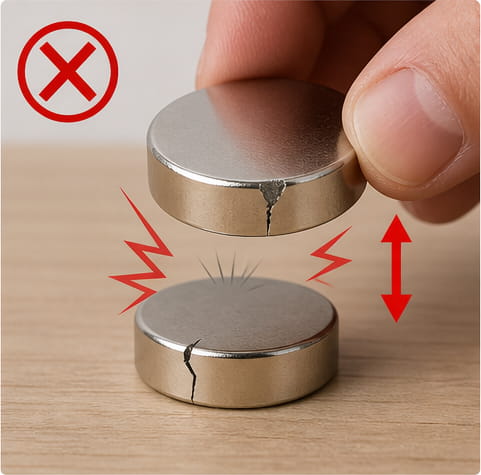
I already mentioned this one, but it’s worth repeating. This is the #1 killer of neodymium magnets. Always slide magnets apart. Never try to pull them directly apart.
Dropping on Hard Surfaces
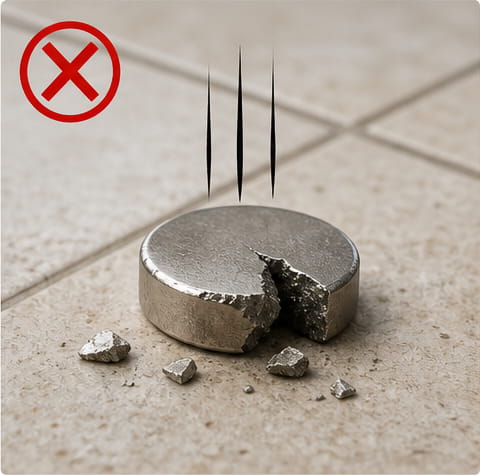
A tile floor, concrete, even a hardwood floor – any hard surface can crack a neodymium magnet if dropped from just a few feet up.
Using Pliers or Hammers
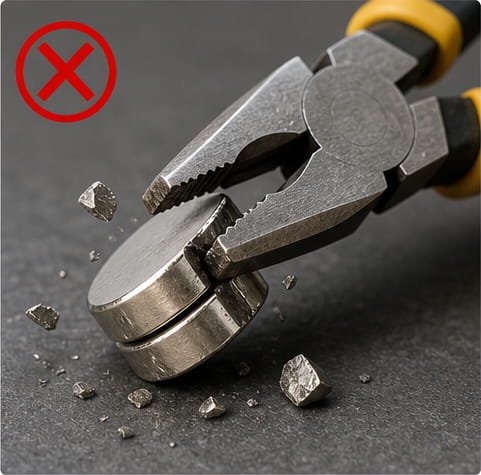
I’ve seen people try to separate stuck magnets with tools. Don’t do this. You’ll almost certainly chip or crack the magnets. Plus, flying metal shards are a real risk.
Drilling or Machining
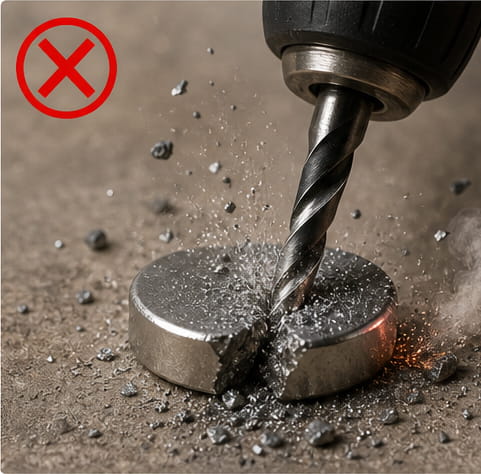
This one’s super dangerous. Neodymium magnet dust and powder are highly flammable. And drilling into a magnet can cause it to shatter explosively.
Corrosion Damage
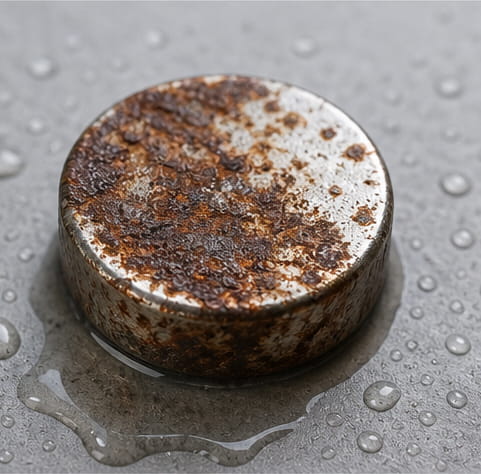
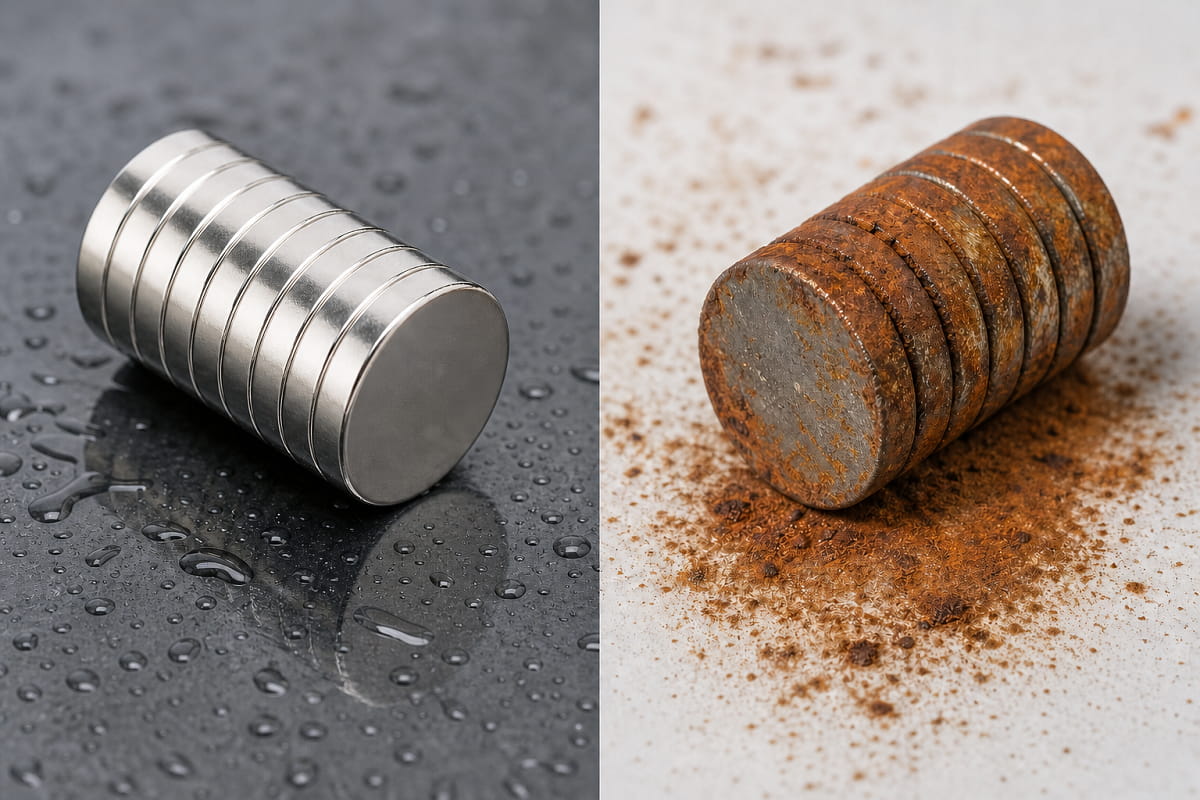
Here’s something most people don’t realize. Neodymium magnets are not waterproof. If the protective nickel plating gets damaged, moisture can get in and cause rust. Over time, that corrosion weakens the internal structure and makes the magnet more likely to break.
How to Handle Neodymium Magnets Without Breaking Them
Wear Eye Protection
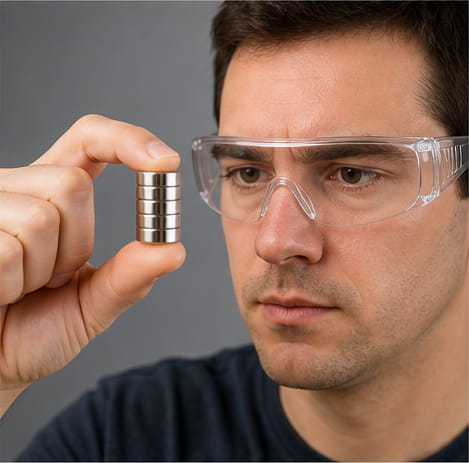
I’m serious about this one. Always wear safety glasses when handling neodymium magnets. Those tiny flying shards can cause permanent eye damage.
Slide, Don’t Pull

When separating magnets, diapositive the top magnet off the stack. Don’t try to pull it directly upward. Sliding requires much less force and dramatically reduces the risk of sudden snapping.
Work on a Metal Surface
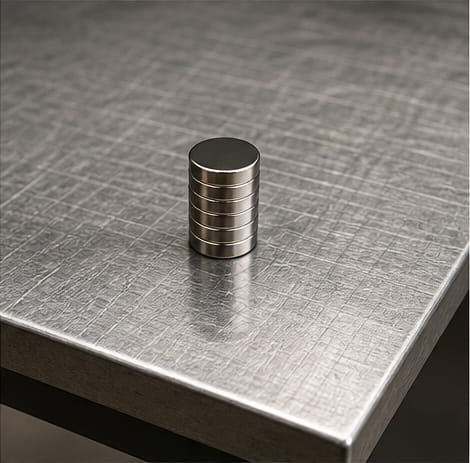
This is a pro tip that most people don’t know.
Work on a steel table or surface. The magnets will stick to the surface, which keeps them from sliding around or jumping together unexpectedly.
Keep Your Distance
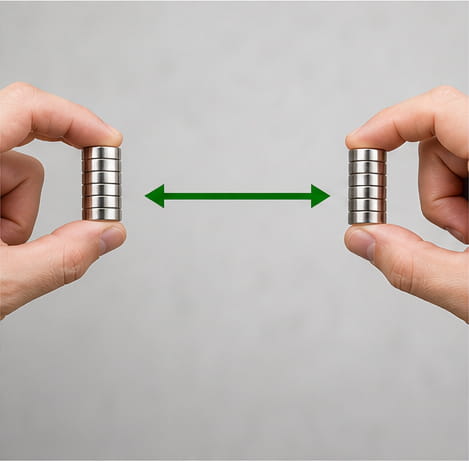
When you’re holding magnets in both hands, keep them far apart. I’m talking several feet. The attractive force between two strong magnets can kick in from surprisingly far away.
Use Non-Magnetic Tools
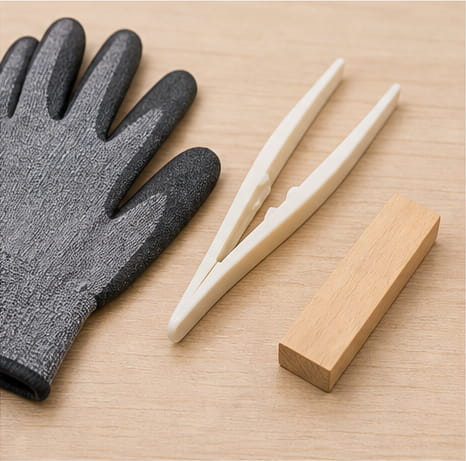
Gloves, plastic tweezers, wooden spacers – anything non-magnetic can help you manipulate magnets without risking your fingers.
Store Magnets Properly
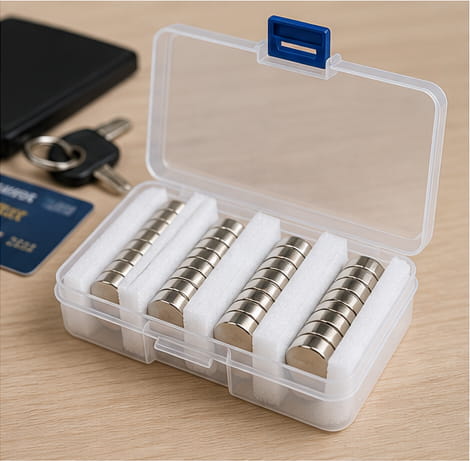
Keep your magnets in a container with non-magnetic spacers between them. And store them away from other metal objects, electronics, and credit cards.
What About Coatings? Can They Help?
You might be wondering: “What if I use a thicker coating? Will that make my magnets more durable?”
The coating (usually nickel, zinc, or epoxy) primarily protects against corrosion – not impact damage. A thicker coating won’t stop a magnet from shattering when two of them snap together.
That said, there’s one approach that does work.
Encapsulating the magnet in a soft material – like rubber or plastic – can absorb some of the shock from impacts. This is how “rubber coated” magnets are made. They’re significantly more durable than bare neodymium magnets.
But here’s the catch: encapsulation reduces the magnetic force at the surface. So you’re trading some performance for durability.
For most applications, standard nickel-plated magnets are fine – as long as you handle them properly.
What to Do With Broken Neodymium Magnets
So you’ve got a broken magnet. Now what?
Can You Repair It?
Unfortunately, no. Once a neodymium magnet breaks, you can’t simply glue it back together and expect it to work like new.
The magnetic circuit is disrupted. Even if you use epoxy to hold the pieces together, the magnetic strength won’t be the same. There will always be gaps that reduce performance.
Can You Repurpose the Pieces?
Absolutely.
Smaller magnetic fragments are still useful. You can use them for:
- Holding notes on a fridge
- DIY projects where exact strength isn’t critical
- Science experiments
- Securing lightweight items
Just be careful with sharp edges.
How to Dispose of Them
Neodymium magnets contain rare earth metals. They shouldn’t go in your regular trash.
Check with your local recycling center. Many accept rare earth magnets for proper disposal or recycling.
My #1 Tip to Keep Neodymium Magnets From Breaking
After years of working with these magnets, I’ve learned one thing above all else:
Prevention is everything.
You can’t “fix” a broken magnet. You can’t “repair” a chipped edge. Once the damage is done, it’s permanent.
So here’s my single best piece of advice:
Treat every neodymium magnet like it’s made of glass.
Because when it comes to impact resistance, that’s essentially what you’re dealing with.
Don’t let them snap together. Don’t drop them. Don’t use tools on them. Slide them apart carefully. Store them with spacers. Wear eye protection.
Follow those rules, and your magnets will retain their full magnetic strength for decades.
Ignore them? Well, you’ll be back here asking “Do neodymium magnets break easily?” – and you’ll already know the answer from personal experience.
Conclusion
Neodymium magnets are incredible tools. Their strength-to-weight ratio is unmatched. They’ve revolutionized everything from hard drives to wind turbines to medical devices.
But that power comes with a trade-off.
Do neodymium magnets break easily? Yes. They’re brittle. They shatter. They chip. They crack.
But that doesn’t mean you should avoid them. It just means you need to respect them.
Handle them carefully. Use the right techniques. Wear safety gear. And they’ll serve you well for years to come.
Now go forth and magnetize – just do it safely.