Résumé rapide
Peut-on couper un aimant au néodyme ? Techniquement, oui, mais c'est risqué. Ces aimants sont fragiles, la chaleur les démagnétise de manière irréversible et leur poussière est inflammable. Si vous devez absolument les couper, utilisez une meule diamantée avec un arrosage constant. Il est toutefois plus sûr et plus judicieux d'acheter des aimants aux dimensions sur mesure.
La plupart des gens pensent que les aimants en néodyme ressemblent à de petites briques métalliques. Vous savez, le genre qu’on peut passer à la scie à ruban pour les découper à la bonne taille.
Ce n'est pas le cas.
Un client m'a demandé : “ Peut-on découper un aimant en néodyme ? ”
Et à chaque fois, je leur donne la même réponse :
Techniquement, oui. Mais tu ne devrais probablement pas.
Dans cet article, en tant que professionnel fabricant d'aimants en néodyme, laissez-moi vous expliquer pourquoi.
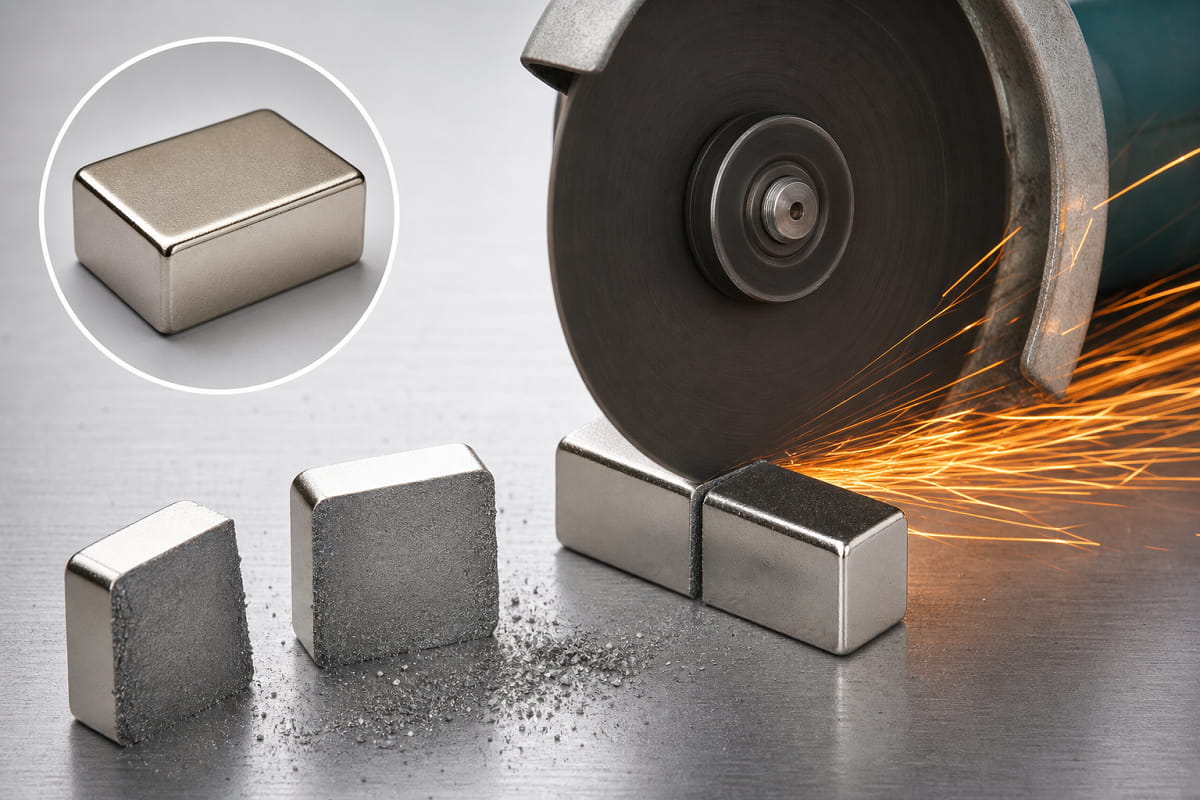
Tout ce qu'il faut savoir sur la découpe des aimants en néodyme
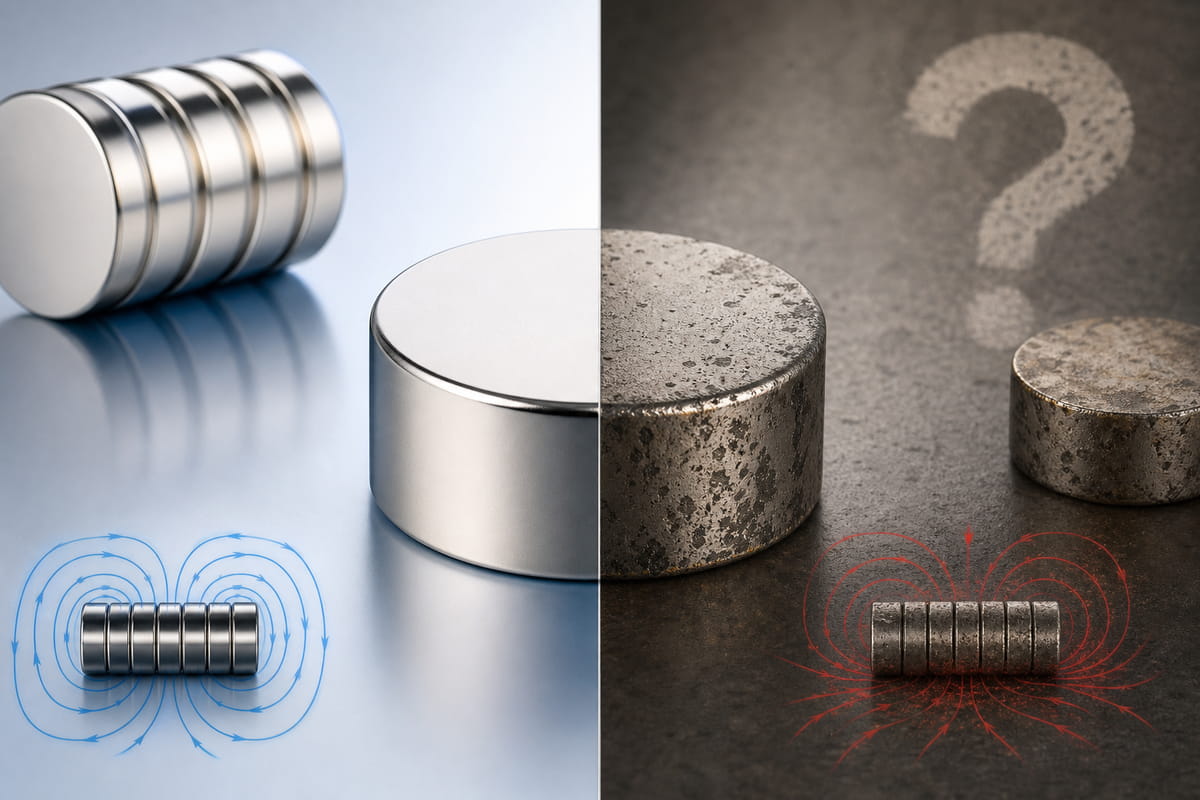
Les aimants en néodyme (également appelés aimants NdFeB) ne sont pas constitués de métal massif comme l'acier ou l'aluminium.
En fait, ils sont poudre frittée qui a été comprimé et magnétisé.
Imaginez-les comme une céramique dure et cassante. Sauf qu’ils sont bien plus résistants. Et bien plus dangereux quand ça tourne mal.
Voici ce qui se passe quand on essaie d'en couper un à la scie à métaux ou à la meuleuse :
- Éclatant – L'aimant explose en éclats coupants
- Étincelles – Le frottement produit des étincelles
- Incendie – La poussière est hautement inflammable (nous y reviendrons dans un instant)
Ce n'est pas vraiment le genre de situation que l'on souhaite voir se produire sur son établi.
Les 5 risques liés à la découpe d'un aimant en néodyme
Avant d'entrer dans le vif du sujet comment Si vous êtes vraiment déterminé à supprimer ces éléments, voyons ensemble quels sont les enjeux.
1. La démagnétisation (la plus importante)
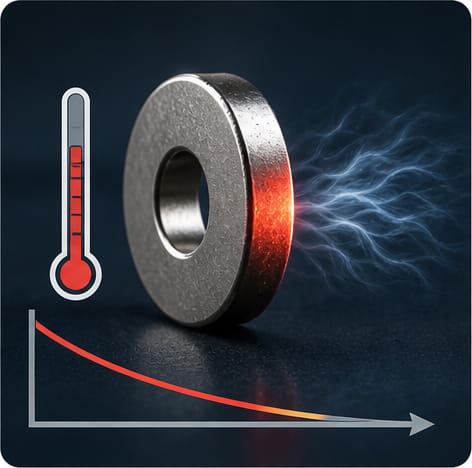
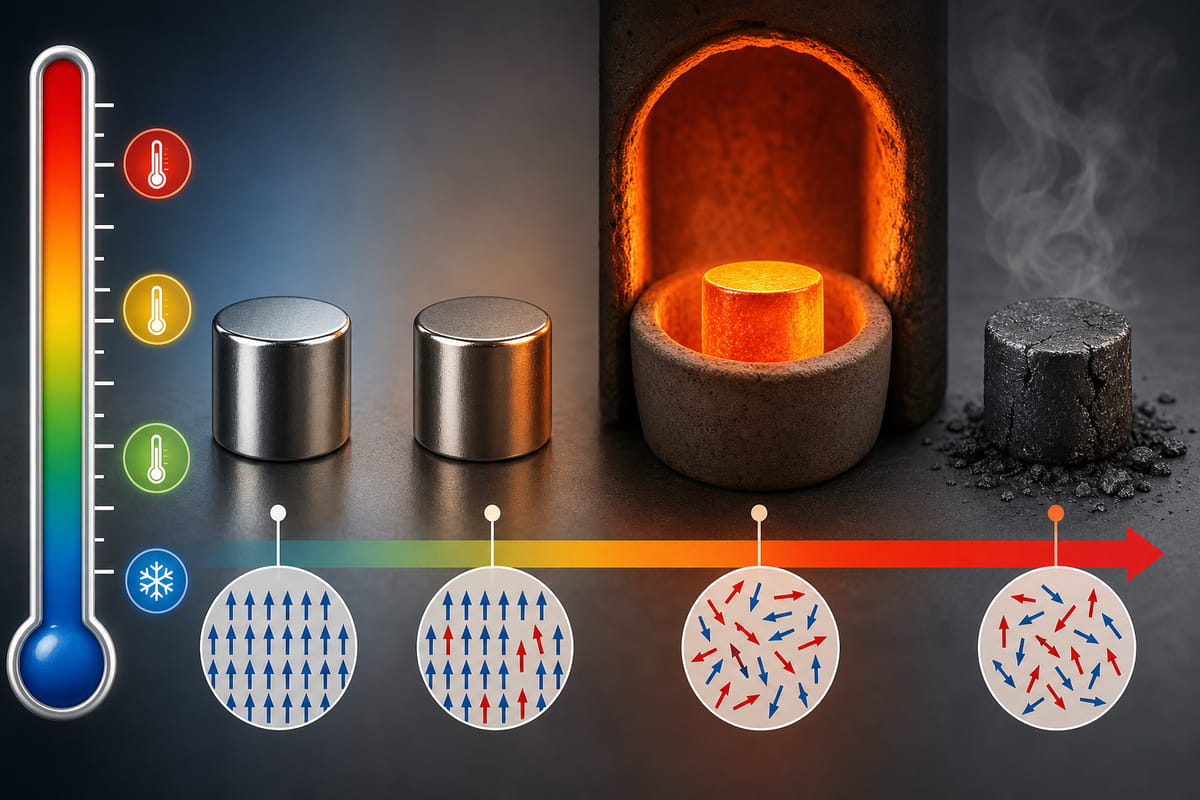
Les aimants en néodyme ont une limite de température.
La plupart des nuances commencent à perdre définitivement leur magnétisme vers 80 °C (176 °F).
Ce n'est pas très chaud.
Une lame de coupe standard génère bien plus de chaleur que cela. Et dès que vous franchissez la Point de Curie? Pouf. Votre aimant se transforme alors en un presse-papier hors de prix.
2. Risque d'incendie (oui, vraiment)
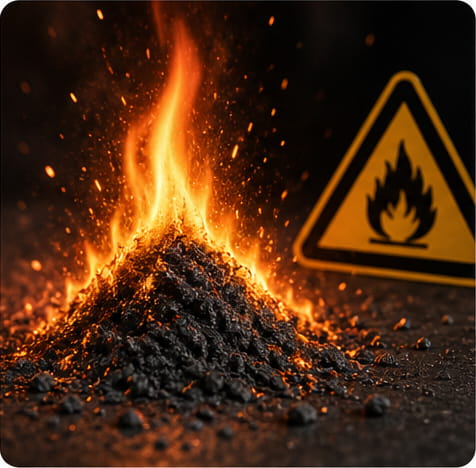
La poussière de néodyme est pyrophorique.
Cela signifie qu'il peut s'enflammer spontanément lorsqu'il est exposé à la chaleur et aux frottements.
Et quand ça brûle ? Ça brûle VITE. Aussi vite qu'une fusée éclairante au magnésium. En plus, les fumées sont toxiques.
3. Rupture par fragmentation et rupture explosive
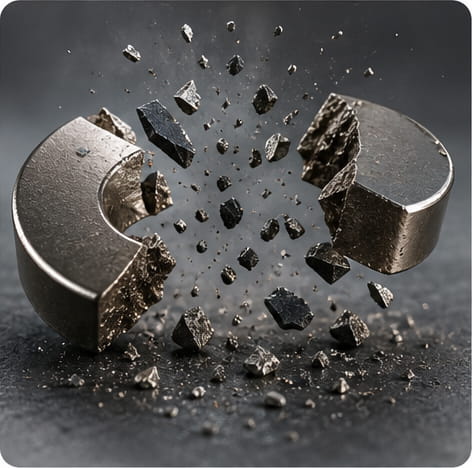
Les aimants en néodyme étant fragiles, une pression trop forte peut les faire s'ébrécher, se fissurer ou exploser.
J'ai entendu des anecdotes de bricoleurs qui ont essayé de découper un petit aimant avec une Dremel… pour le voir se briser en une douzaine de morceaux.
4. Risques de pincement
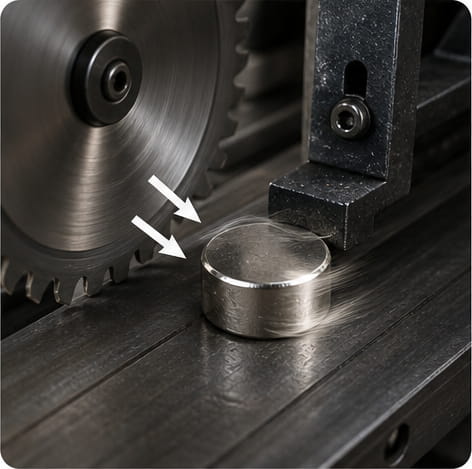
Vous est-il déjà arrivé de voir deux aimants en néodyme s'attirer à travers toute la pièce ?
Imaginez maintenant que cela se produise alors que vos mains se trouvent près d'une lame en rotation.
Si votre aimant ne fonctionne pas bien serré, il va se retrouver happé par la lame. Et ça, c'est la recette du désastre.
5. La corrosion (les conséquences)
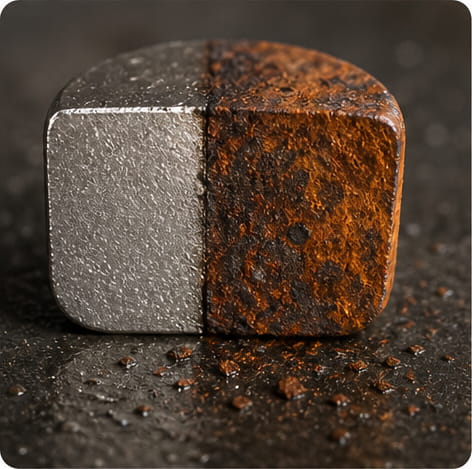
Même si vous parvenez à couper l'aimant, ce n'est pas encore fini.
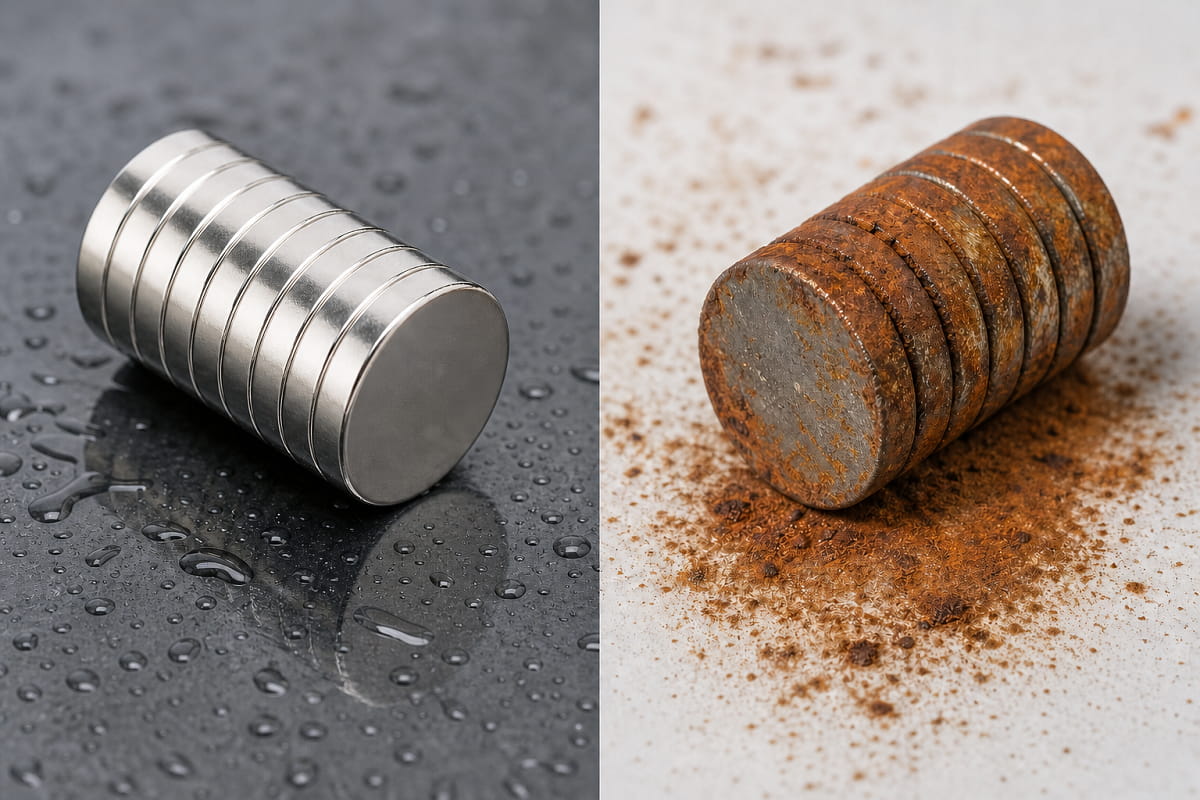
Le métal à nu (il s'agit de fer de type 70%) commencera à rouiller en quelques heures.
Vous devrez donc appliquer une nouvelle couche la surface. Sinon, votre aimant finira par se transformer petit à petit en une poussière cassante et friable.
Alors… Peut-on couper un aimant en néodyme en toute sécurité ?
Oui. Mais seulement si vous avez le les bons outils et équipement de sécurité.
Les professionnels ont recours à des méthodes spécifiques qui limitent la chaleur et réduisent le risque d'éclatement.
Voici ce qui fonctionne vraiment :
Méthode #1 : meule diamantée + liquide de refroidissement
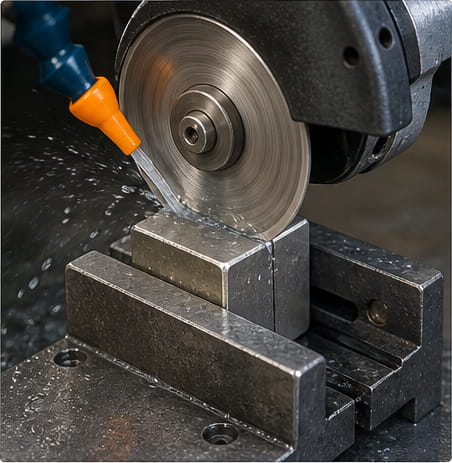
C'est la méthode la plus accessible pour les bricoleurs.
Ce dont vous aurez besoin :
- Un outil rotatif (comme un Dremel) équipé d'un disque de coupe diamanté
- Pulvérisation continue d'eau ou d'huile (pour assurer le refroidissement)
- Un étau ou une pince de serrage
- Lunettes de protection, gants et masque respiratoire
Le processus : 1. Fixez solidement l'aimant (il ne doit pas bouger) 2. Tracez votre ligne de coupe 3. Mettez la meule diamantée en marche 4. Pulvérisez du liquide de refroidissement en continu pendant la coupe 5. Allez-y LENTEMENT. Laissez l'outil faire le travail.
Conseil de pro : Si vous voyez des étincelles, c'est que vous avez déjà tout raté. Arrêtez-vous immédiatement.
Méthode #2 : Électroérosion à fil (la méthode professionnelle)
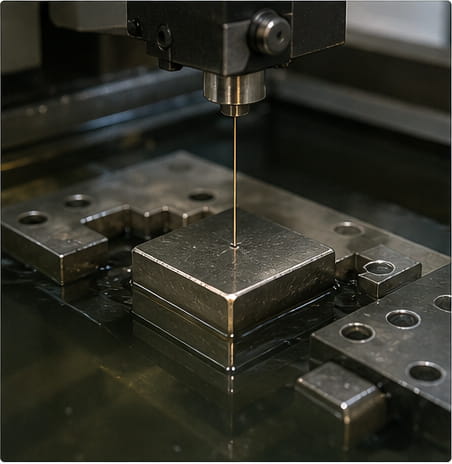
L'usinage par électroérosion (EDM) utilise un fil fin pour découper des matériaux conducteurs sans contact physique.
Pas de chaleur. Pas d'étincelles. Pas d'éclats.
Le bémol ?
Les machines d'usinage par électroérosion (EDM) coûtent cher. Vraiment très cher, au niveau industriel.
Mais si vous en avez un à votre disposition ? C'est sans conteste la méthode la plus sûre.
Méthode #3 : scie à fil diamanté
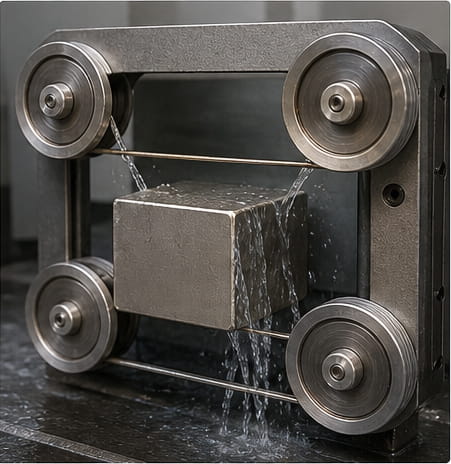
C'est ce qu'utilisent de nombreux fabricants d'aimants.
Une boucle métallique revêtue de diamant découpe le matériau en générant un minimum de chaleur. La faible largeur de la tranchure permet de réduire le gaspillage de matière. De plus, la force de coupe est répartie uniformément, ce qui diminue le risque de fissuration.
Cet équipement coûte des milliers de dollars. À moins que vous ne teniez un magasin spécialisé dans les aimants, ce n'est probablement pas une option réaliste.
Ce qu'il ne faut PAS utiliser
Je vais vous faire gagner du temps (et de l'argent) :
| Outil | Pourquoi c'est une mauvaise idée |
|---|---|
| Scie à métaux | Trop de frottements. L'aimant va se briser. |
| Meuleuse d'angle | Étincelles + poussière inflammable = risque d'incendie |
| Forets standard | Ça ne traversera pas le revêtement en nickel |
| Disque de coupe abrasif | Génère une chaleur intense → démagnétisation |
J'ai vu des messages sur des forums où des gens affirment avoir “ simplement utilisé une scie à métaux et que ça a très bien marché ”.”
Peut-être ont-ils eu de la chance.
Mais je ne prendrais pas ce risque. Et vous ne devriez pas non plus.
Que se passe-t-il après la coupure ?
Imaginons que vous ayez réussi à découper votre aimant (à l'aide d'outils diamantés et d'un liquide de refroidissement).
Voici ce à quoi vous pouvez vous attendre :
Vous avez désormais deux aimants plus petits.
La découpe ne détruit pas les propriétés magnétiques. Elle crée simplement un nouveau pôle nord sur l'une des pièces et un nouveau pôle sud sur l'autre.
Mais la surface exposée va rouiller.
Les aimants en néodyme sont composés à environ 70% de fer. Or, fer + air = oxydation.
Vous devrez donc réappliquer une couche de produit sur la surface coupée dès que possible.
Qu'est-ce qui fonctionne le mieux ?
Une résine époxy bicomposante (comme JB Weld) est la meilleure solution. Elle pénètre dans les pores du matériau fritté et forme une barrière résistante.
Certaines personnes utilisent de la colle forte ou du vernis à ongles. Mais ces solutions ne tiennent pas sur le long terme.
L'alternative plus intelligente
Je sais. Vous êtes venu ici pour trouver un moyen de découper vos aimants.
Mais Mieux vaut acheter la bonne taille dès le départ.
Les fabricants d'aimants sur mesure peuvent produire des aimants en néodyme dans pratiquement toutes les formes et toutes les tailles. Et c'est eux qui se chargent de la découpe avant magnétisation.
En quoi est-ce important ?
En effet, le néodyme non magnétisé est beaucoup plus facile à usiner. Aucun champ magnétique ne vient perturber le processus de découpe. Aucun risque de coincement. Aucune poussière dangereuse ne vient vous menacer le visage.
Oui, les commandes sur mesure coûtent plus cher au départ.
Mais cette prime vaut-elle la peine d'éviter de se rendre aux urgences ?
Je pense que oui.
Mes conseils étape par étape (si vous DEVEZ réduire vos dépenses)
Très bien. Vous avez lu les avertissements. Vous comprenez les risques.
Et tu veux quand même découper ton aimant en néodyme.
Voici exactement ce que je recommande :
Étape 1 : Se préparer
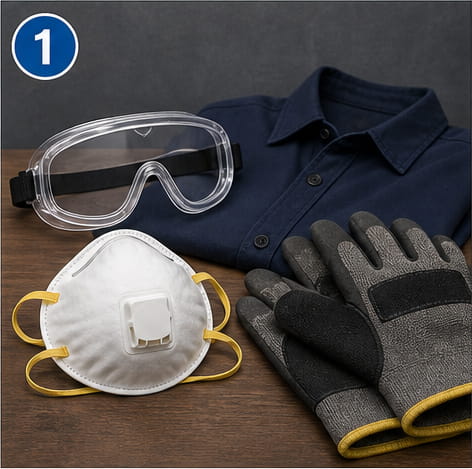
- Lunettes de protection (pas des lunettes de vue, mais des lunettes de protection)
- Masque respiratoire N95 ou équivalent
- Gants de travail épais
- Manches longues
Étape 2 : Fixer l'aimant
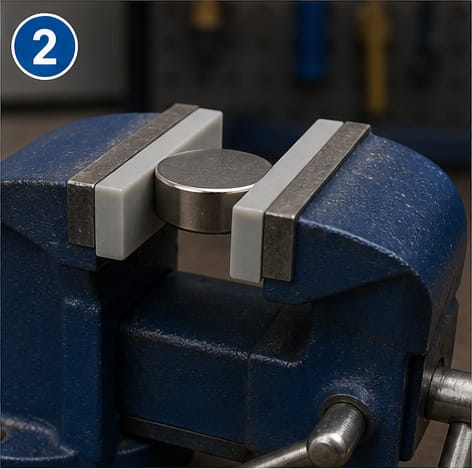
Serrez-le bien FORT.
Utilisez un étau muni de mâchoires en caoutchouc ou en plastique pour éviter tout écrasement. L'aimant ne doit PAS bouger du tout.
Étape 3 : Mise en place du liquide de refroidissement
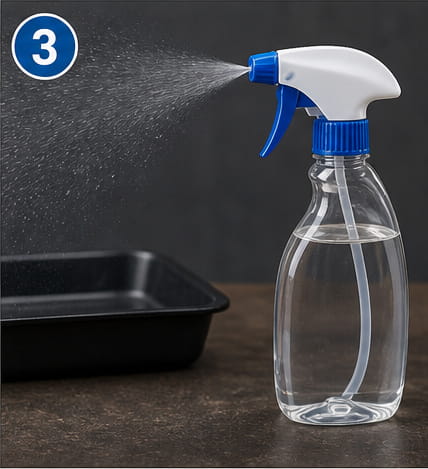
Remplissez un vaporisateur d'eau.
Vous pulvériserez en continu tout au long de la coupe.
Étape 4 : Coupez lentement
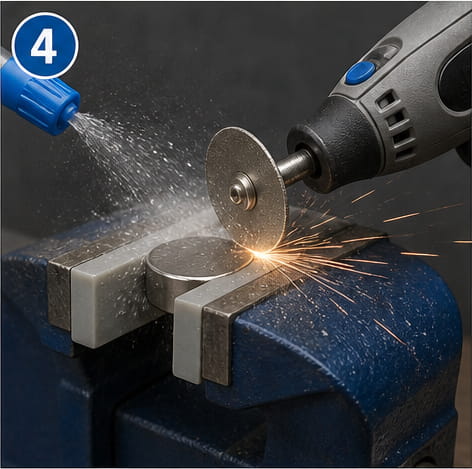
Utilisez un disque diamanté sur un outil rotatif.
Exercez une légère pression. Laissez l'outil se charger de la découpe.
Si vous voyez des étincelles ou si vous sentez une résistance, arrêtez-vous. Vous allez trop vite.
Étape 5 : Nettoyage
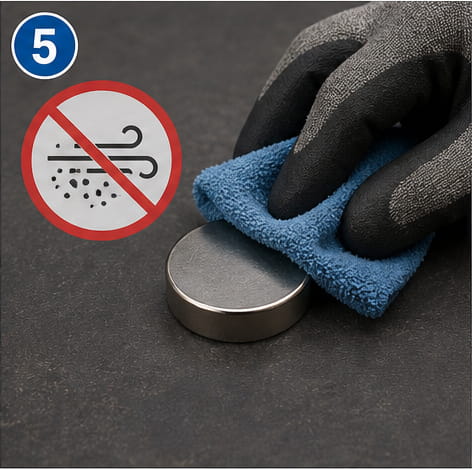
Une fois la découpe terminée, essuyez la poussière à l'aide d'un chiffon humide.
Ne soufflez PAS la poussière. Cela projette des particules inflammables dans l'air.
Étape 6 : Sceller le bord
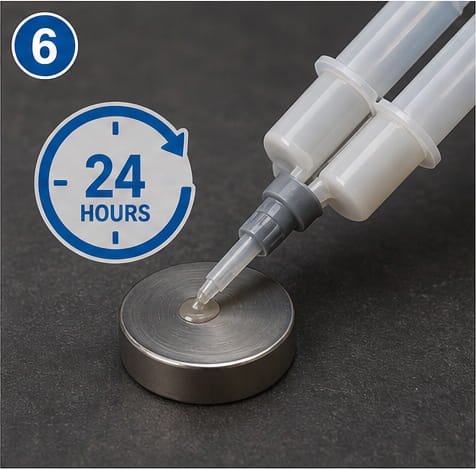
Appliquez immédiatement de la résine époxy bicomposante sur la surface exposée.
Laissez sécher pendant 24 heures avant d'utiliser l'aimant.
FAQ : Réponses rapides aux questions courantes
Est-ce que le fait de couper un aimant va l'affaiblir ?
Pas tout de suite. Mais si vous le surchauffez pendant la découpe, il perdra définitivement son magnétisme.
Puis-je découper un aimant en néodyme avec un Dremel ?
Oui, mais uniquement avec un disque de coupe diamanté et un arrosage constant. Une meule de coupe standard génère trop de chaleur.
Et la découpe au laser ?
N'y pensez même pas. Les lasers génèrent une chaleur extrême, qui détruira les propriétés magnétiques presque instantanément.
Puis-je percer un trou dans un aimant en néodyme ?
Les mêmes règles s'appliquent. Utilisez une fraise diamantée, procédez lentement et utilisez un liquide de refroidissement. Les forets pour verre ou pour maçonnerie sont les plus adaptés.
Peut-on découper de petits aimants sans danger ?
La taille n'a pas beaucoup d'importance en matière de risque. Un aimant de 2 mm d'épaisseur peut tout de même se briser, produire des étincelles ou prendre feu.
En résumé
Peut-on découper un aimant en néodyme ?
Oui. Mais c'est risqué, cela nécessite des outils spécialisés et peut endommager définitivement votre aimant si vous ne faites pas attention.
Si vous disposez d'outils de coupe au diamant et d'un système de refroidissement par liquide ? N'hésitez pas.
Vous envisagez d'utiliser une scie à métaux ou une meuleuse d'angle ? Ne fais pas ça.
Et si vous avez les moyens d'acheter des aimants sur mesure auprès d'un fabricant ? C'est toujours la meilleure solution.
Ton projet ne vaut pas le coup de te retrouver aux grands brûlés.
Faites attention à vous.